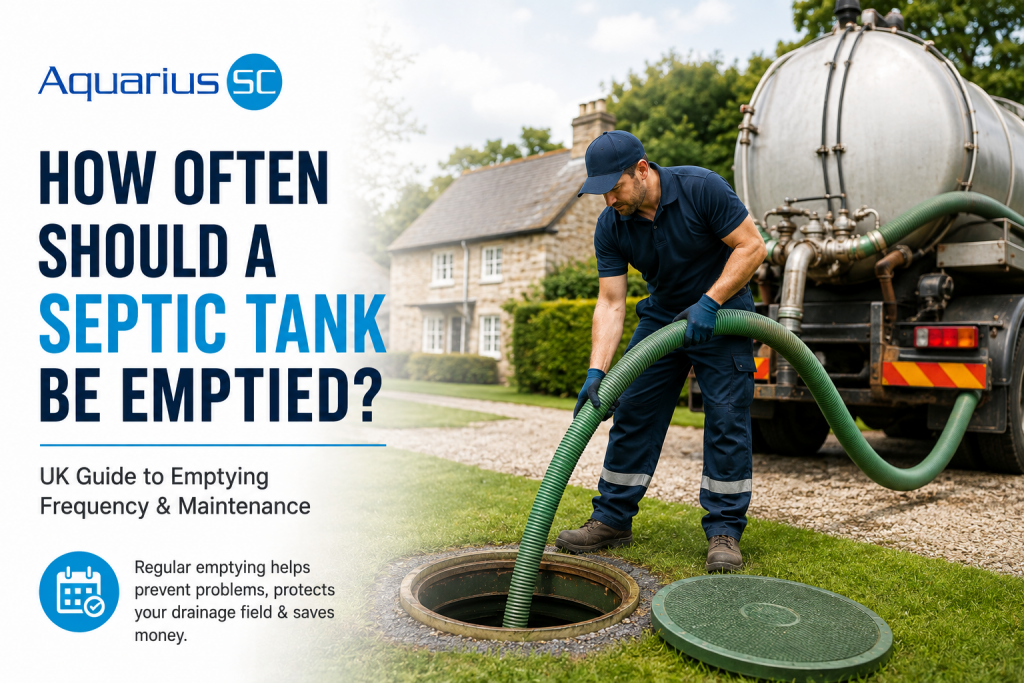
A septic tank should generally be emptied at least once a year, although the exact frequency depends on the tank, the number of people using it, how quickly sludge accumulates and the manufacturer’s instructions. For septic tanks in England, the Environment Agency says accumulated sludge must be removed before it exceeds the tank’s maximum capacity […]
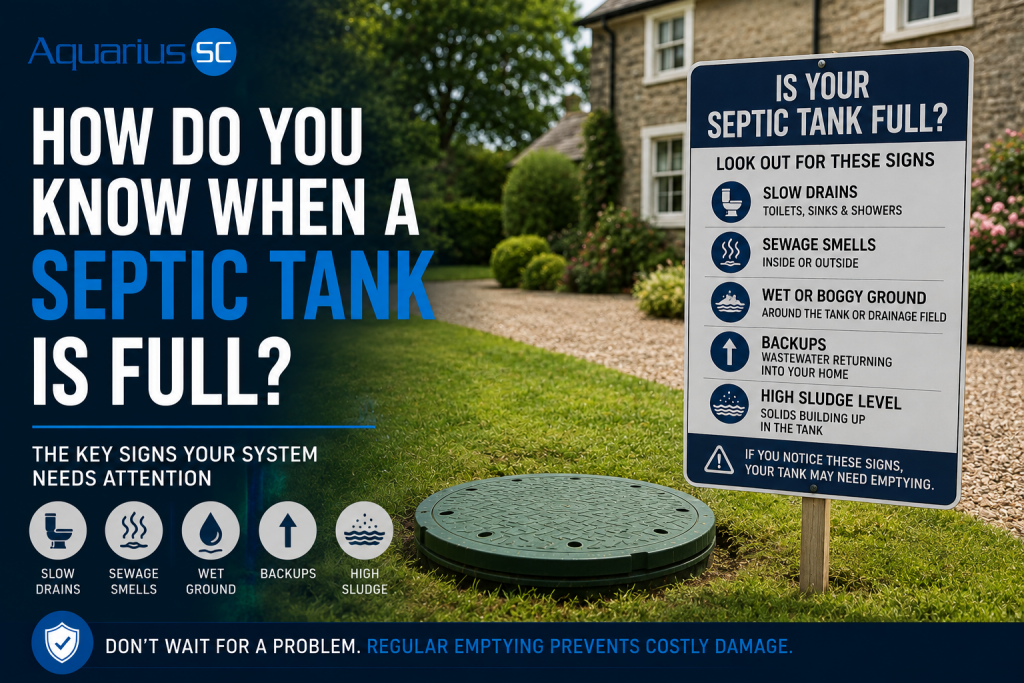
The clearest signs that a septic tank may need emptying are slow drainage throughout the property, persistent sewage smells, wastewater backing up, a high sludge level and problems appearing around the tank or drainage field. However, these symptoms don’t always mean the septic tank itself is full. A blocked pipe or failing drainage field can […]

In 2026, septic tank emptying typically costs around £175–£300 for a standard domestic tank in the UK, although larger tanks and more complicated jobs can reach £400 or more. The actual amount you pay depends on the size of the tank, how much waste needs removing, where you live, how easily the tanker can access […]
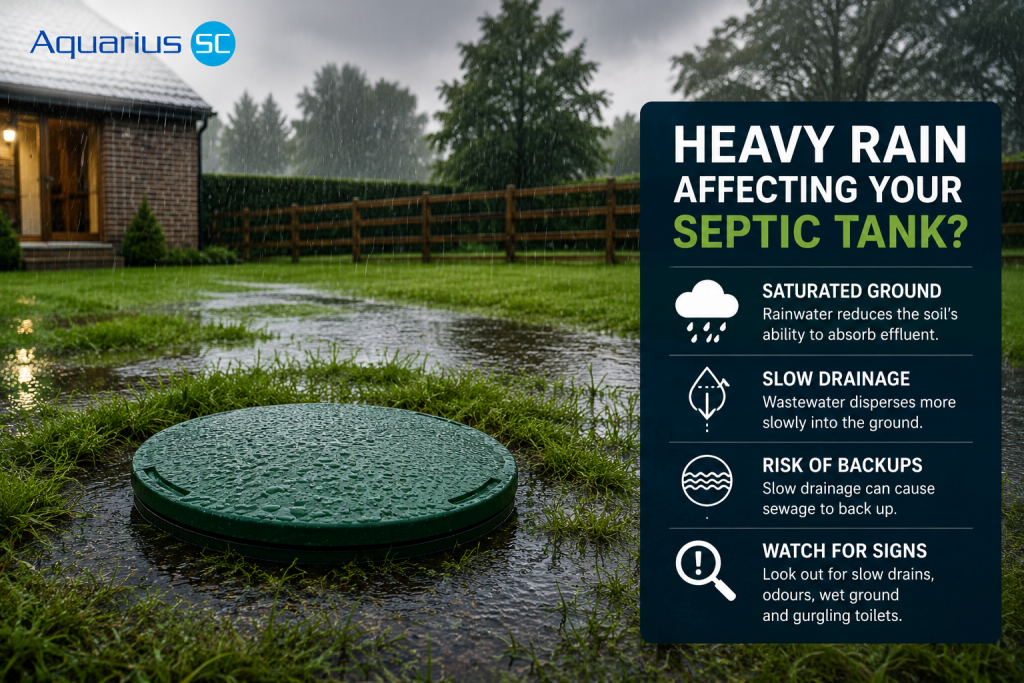
Yes. Heavy or prolonged rain can affect a septic tank system, particularly when the soil around the drainage field becomes saturated. Waterlogged ground has less capacity to accept the liquid effluent leaving the septic tank, which can cause the whole system to drain more slowly. During particularly wet conditions, you may notice slow drains, gurgling […]

If your property uses a septic tank, the safest rule for the toilet is straightforward: only human waste and toilet paper should be flushed. Wet wipes, sanitary products, nappies, cotton buds, condoms and other solid items should go in the bin. You should also be careful about what enters the septic system through sinks and […]
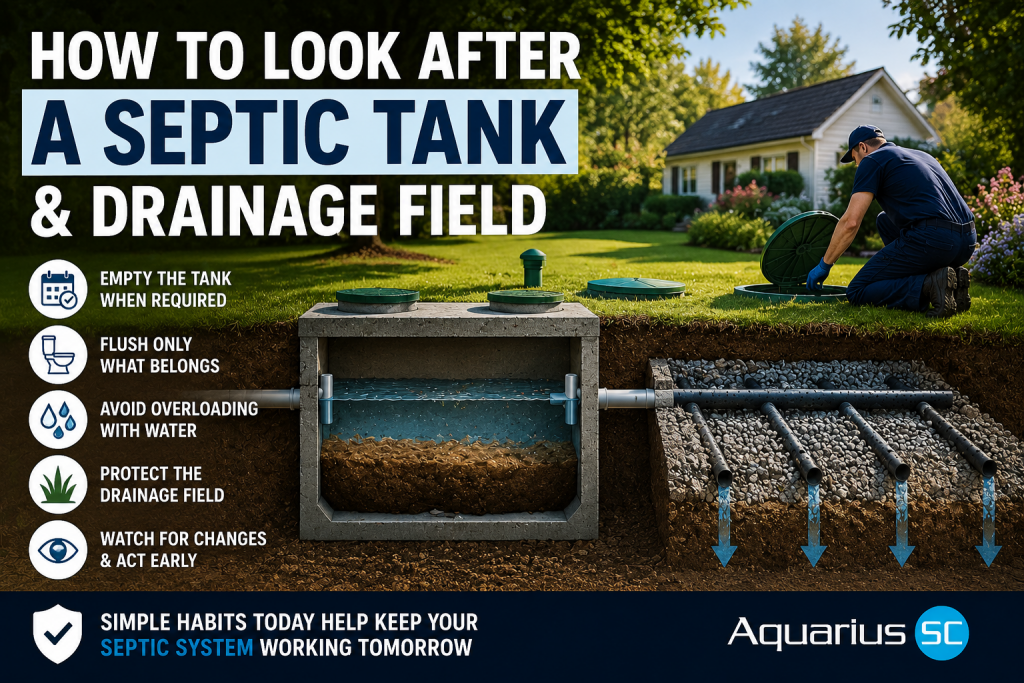
Looking after a septic tank and drainage field is mostly about preventing unnecessary problems rather than constantly interfering with the system. The essentials are straightforward: have the tank emptied when required, be sensible about what enters the system, protect the drainage field, keep unnecessary surface water away and pay attention when the system starts behaving […]
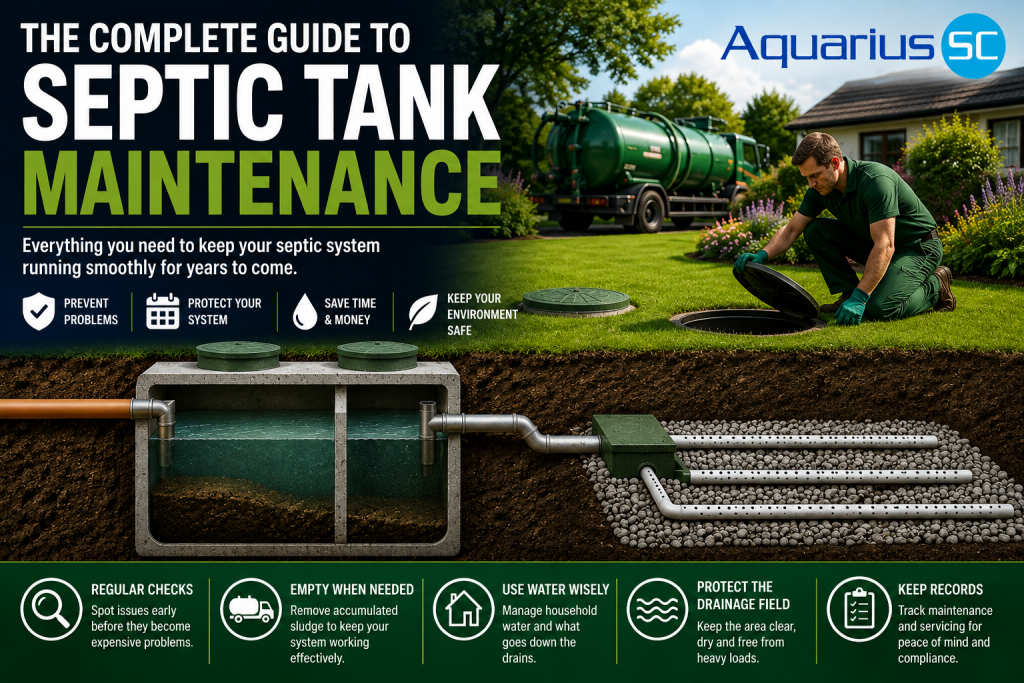
A septic tank system can operate effectively for many years, but that doesn’t mean it should simply be forgotten about until something goes wrong. Good septic tank maintenance is largely preventative. It means having accumulated sludge removed when required, protecting the drainage field, keeping unsuitable materials out of the system and recognising changes that could […]
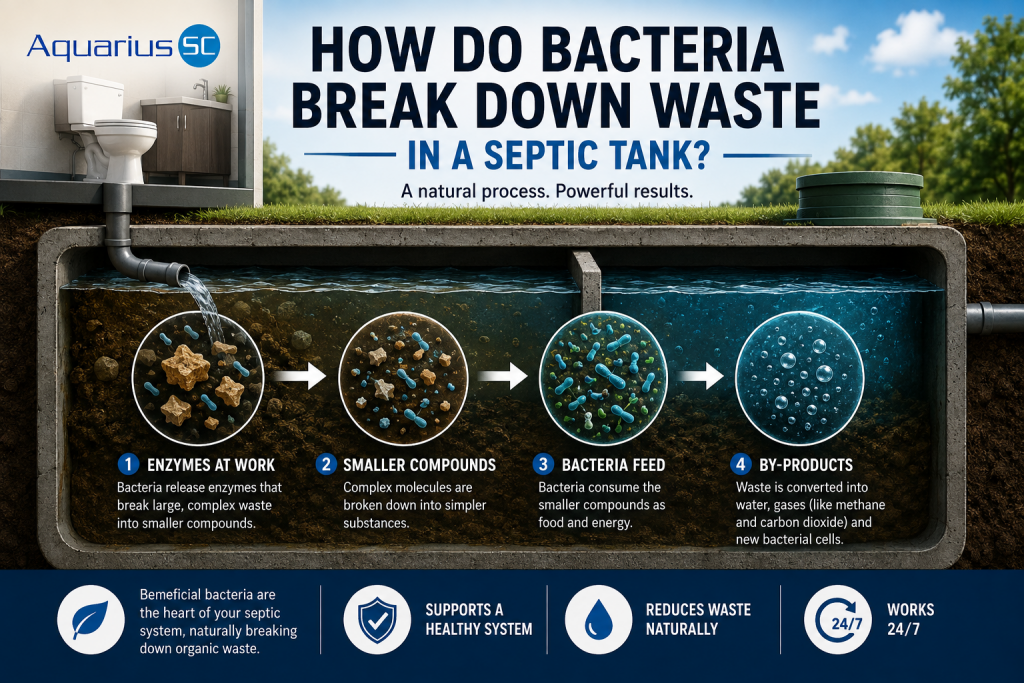
Bacteria in a septic tank break down organic waste by producing enzymes that convert complex materials into smaller compounds that microorganisms can use as nutrients and energy. This biological decomposition happens alongside the physical separation of solids inside the tank. Bacteria can digest a proportion of the organic material entering the system, but they don’t […]

The main things that kill bacteria in a septic tank are bleach, antibacterial disinfectants, strong toilet cleaners and caustic drain cleaners, particularly when they’re used excessively or enter the tank in concentrated quantities. This doesn’t mean you need to avoid normal household cleaning. The concern is repeatedly exposing a septic tank to products specifically designed […]
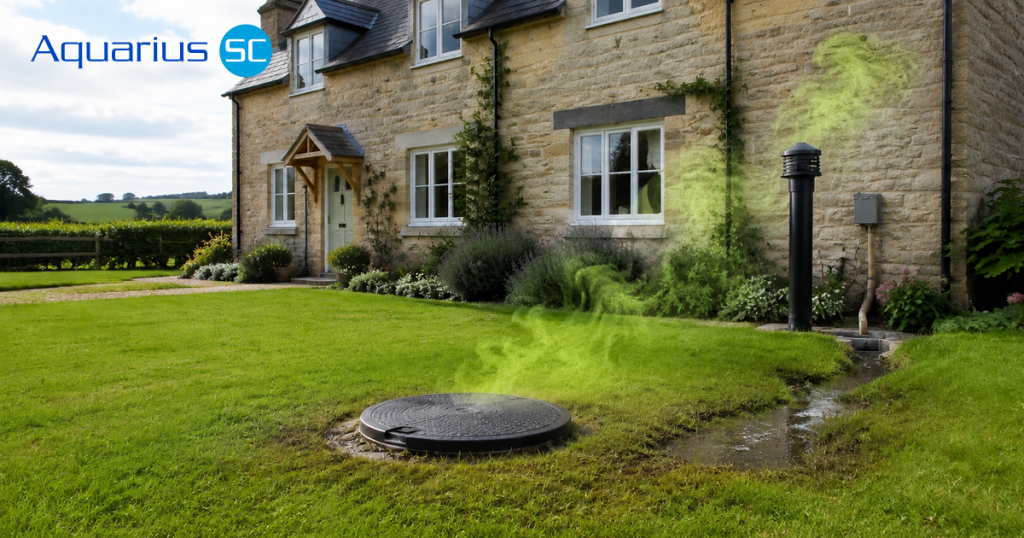
Most homeowners notice a septic tank smell long before they experience a more obvious problem such as wastewater backing up or standing water around the soakaway. That can be reassuring, because unpleasant odours are often an early warning rather than evidence that a septic system has failed. Identifying the source of the smell early gives […]