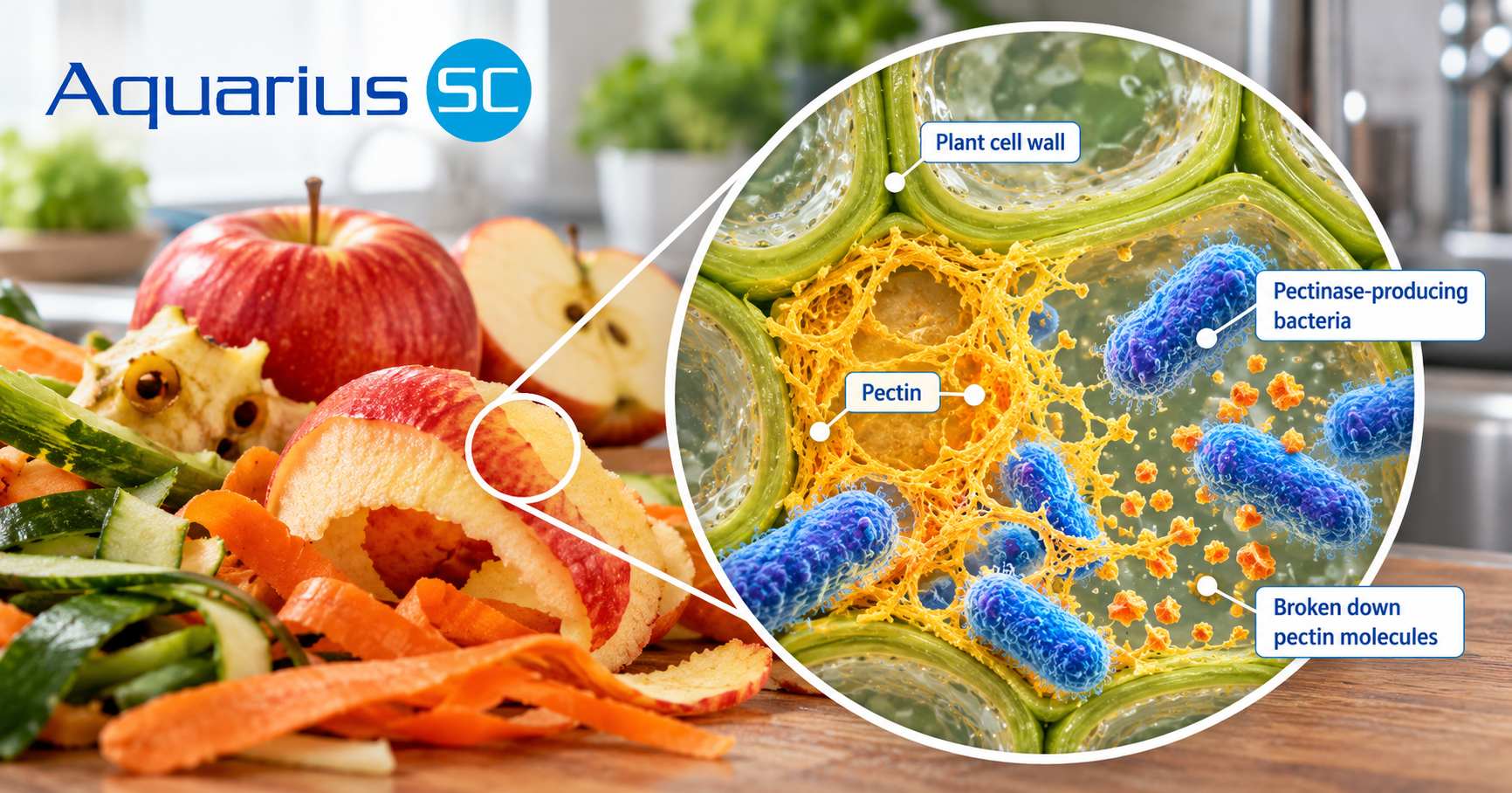
Fruit and vegetable waste contains a complex mixture of organic compounds, many of which require specialised enzymes before microorganisms can fully process them.
One of these compounds is pectin, a naturally occurring carbohydrate that helps maintain the structure of plant tissues.
Certain bacteria produce enzymes known as pectinases, which break down pectin and contribute to the decomposition of plant-derived organic matter.
Pectinase is one of six enzyme activities identified in the Aquarius SC biological formulation. Its function provides another example of how microorganisms use different biochemical processes to act on organic materials found in wastewater.
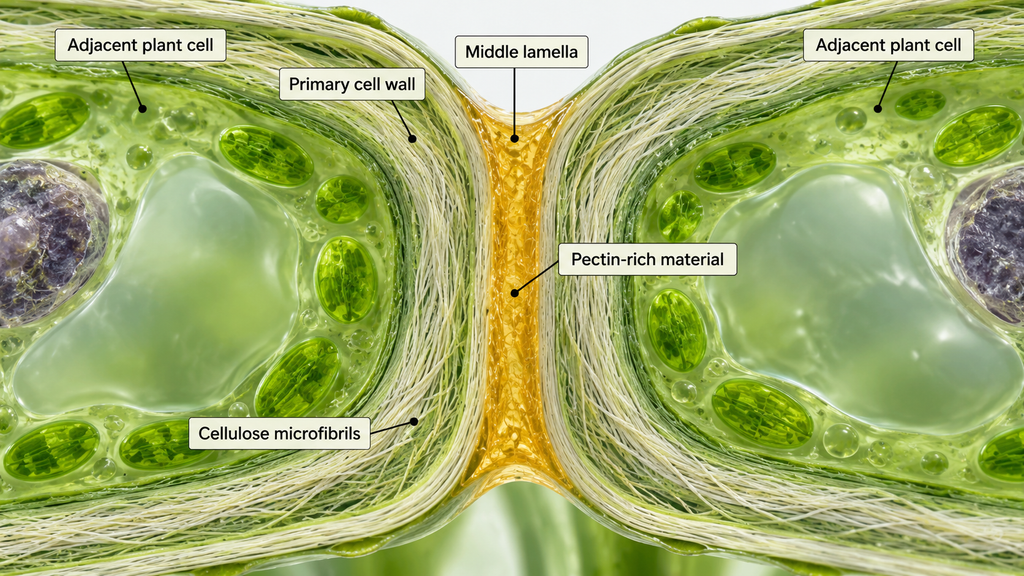
Pectin is a complex polysaccharide found primarily in the cell walls and middle lamella of plants.
It is particularly abundant in many fruits and vegetables, where it contributes to tissue structure, water retention and the adhesion between neighbouring cells.
Unlike starch, which plants use mainly for energy storage, pectin performs important structural functions.
Pectin contains chains rich in galacturonic acid, alongside other sugars arranged in complex molecular structures.
These characteristics influence the firmness and texture of plant tissues.
Research examining pectin structure and its role in plant cell walls explains how pectin contributes to plant development, structural organisation and tissue properties.
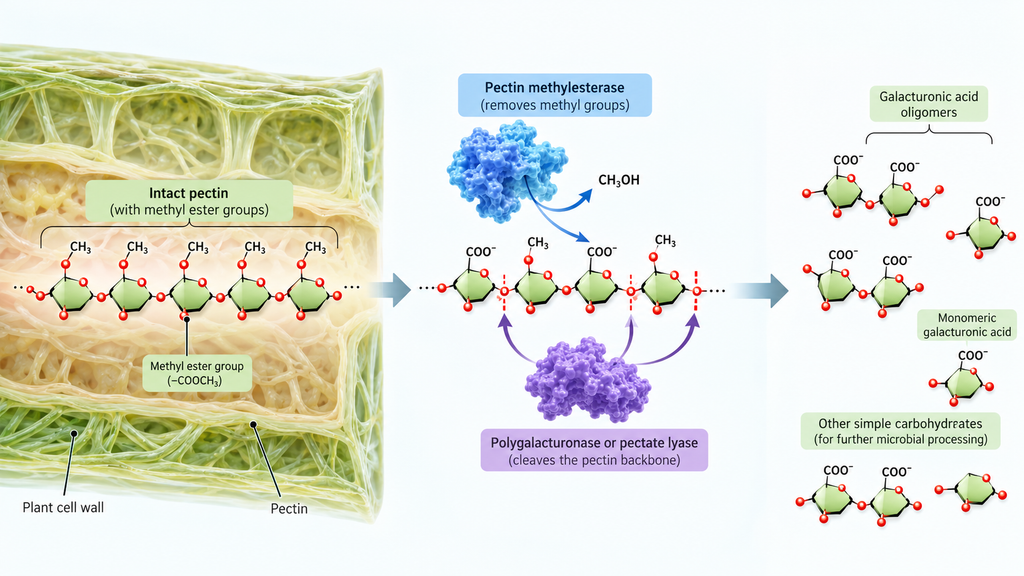
Pectinase refers to a collection of enzymes that modify or degrade pectin and related compounds.
Because pectin contains different chemical structures and bonds, its decomposition often involves several complementary enzyme activities.
Important examples include:
These enzymes perform different biochemical functions.
Therefore, pectinase should be understood as a group of related activities rather than one enzyme with identical properties in every microorganism.
The breakdown of pectin begins when suitable enzymes encounter accessible pectic substances within plant material.
Different enzymes then act on specific parts of the pectin structure.
A simplified process involves four stages:
As pectin is modified and degraded, the structural connections within plant tissues may weaken.
This helps explain why pectin degradation is associated with the softening and decomposition of fruit and vegetable material.
A scientific review of microbial pectin degradation mechanisms examines the different enzyme activities involved.
However, pectinase alone does not completely decompose every component of plant material.
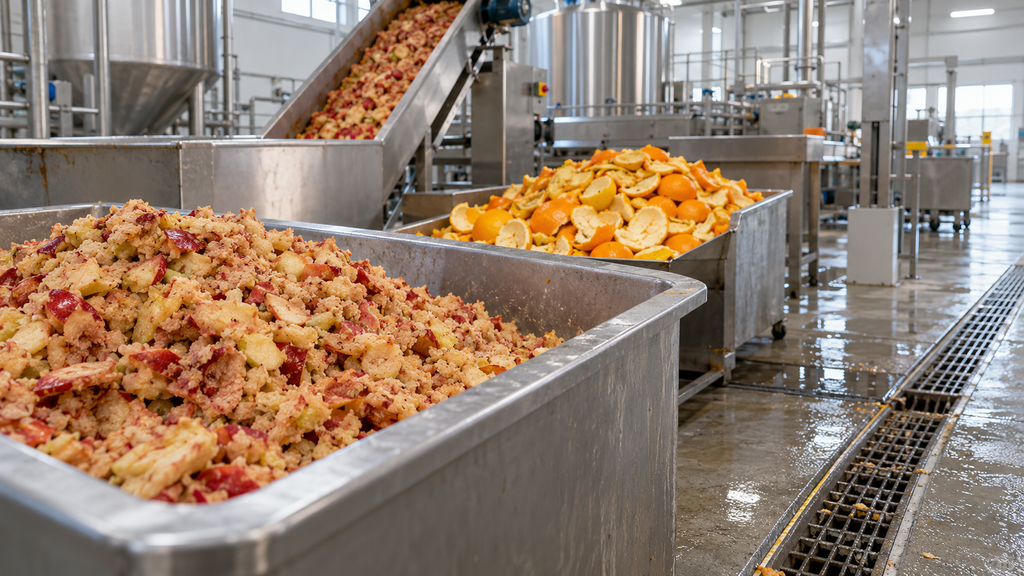
Pectin-rich organic materials occur in domestic and commercial waste streams.
Common examples include fruit peelings, vegetable residues, apple pulp, citrus waste and other plant-derived food materials.
Food-processing industries may generate substantial quantities of pectin-containing wastewater, particularly during fruit preparation and juice manufacturing.
In domestic properties, smaller amounts of plant-derived organic matter may enter wastewater during washing and food preparation.
However, food scraps and peelings should not deliberately be washed into drains.
Even biodegradable materials can contribute to deposits, blockages and excessive organic loading when they enter wastewater systems in large quantities.
Wastewater may contain organic substances originating from several plant components.
Pectin forms part of this mixture, particularly where fruit and vegetable residues are present.
Pectinase-producing microorganisms can contribute to the processing of accessible pectic substances by converting them into smaller compounds.
These reactions form part of wider biological decomposition.
However, the amount of pectin entering individual wastewater systems varies considerably.
Domestic septic tanks generally receive a different mixture of organic materials from industrial fruit-processing systems.
Consequently, the importance of pectinase activity depends on the actual wastewater composition and environmental conditions.
It should not be assumed that every septic tank contains substantial quantities of pectin.
Aquarius SC contains selected microbial cultures capable of producing six identified enzyme activities.
Pectinase contributes the ability to act on pectic substances associated with plant-derived waste.
This complements cellulase, which targets cellulose, and amylase, which acts on starch.
Although these substances are all carbohydrates, they differ considerably in molecular structure and biological function.
The combination of bacteria and their specialised enzyme activities within Aquarius SC therefore reflects the varied composition of organic wastewater.
However, the available product documentation does not identify which individual bacterial strain produces pectinase or establish its activity under every operating condition.
Various bacteria can produce pectinolytic enzymes, including certain members of the Bacillus and Paenibacillus genera.
Different microorganisms produce enzymes that vary in substrate preference, stability and catalytic activity.
Some organisms manufacture multiple complementary pectin-degrading enzymes, whereas others produce a more limited range.
Scientific research into microbial pectinases and their industrial applications describes how bacterial and fungal enzymes are used in fruit processing, textile applications and other biological processes.
Although the Aquarius technical eBook discusses several Bacillus species associated with its wider product range, it does not establish which specific strains are responsible for pectinase activity in Aquarius SC sachets.
Pectinase and cellulase act on different structural components of plants.
Pectinase targets pectin and related substances that contribute to plant tissue organisation and cell adhesion.
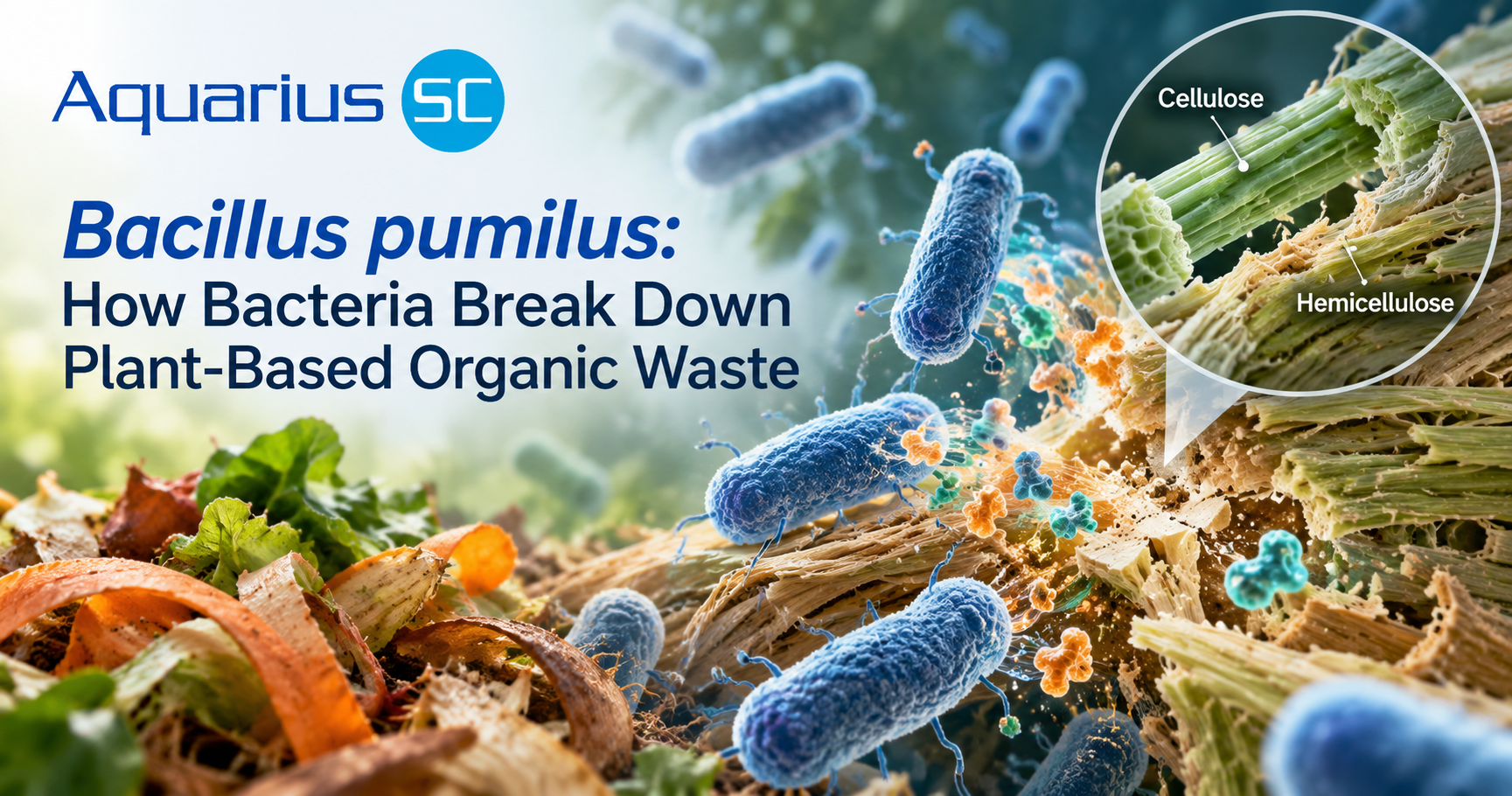
Cellulase breaks particular bonds within cellulose, which forms strong structural fibres in plant cell walls.
Both activities may contribute to plant-material decomposition, but they do not perform identical functions.
The distinction becomes clearer when examining how cellulase-producing bacteria act on cellulose and plant fibres.
Different enzyme activities are necessary because plant material contains several structurally distinct carbohydrates.
Several factors influence pectinase activity and microbial production.
Temperature: Different pectinases operate within particular temperature ranges.
pH: The preferred acidity or alkalinity varies between enzymes.
Pectin structure: Different types of pectin respond differently to specific enzyme activities.
Microbial growth: Bacterial enzyme production depends on suitable nutrients and environmental conditions.
Chemical exposure: Certain substances can inhibit microbial metabolism or interfere with enzymatic reactions.
These factors help explain why pectin degradation rates differ between biological environments.
Pectinase contributes to the degradation of certain plant-derived carbohydrates, but it cannot guarantee the removal or prevention of drainage blockages.
Obstructions frequently contain combinations of grease, hair, unsuitable paper products and other materials that pectinase does not specifically target.
Physical cleaning, routine inspections and appropriate septic tank maintenance remain important.
Biological enzyme activity should be regarded as one component of wastewater treatment rather than a replacement for responsible waste disposal.
Pectinase helps microorganisms process pectin, an important structural carbohydrate found in fruit and vegetable tissues.
Its specialised activity demonstrates why plant-derived organic waste may require several different enzymes for biological decomposition.
Within Aquarius SC, pectinase-producing microbial activity complements other enzyme functions, contributing to the formulation’s broader range of organic waste-processing capabilities.