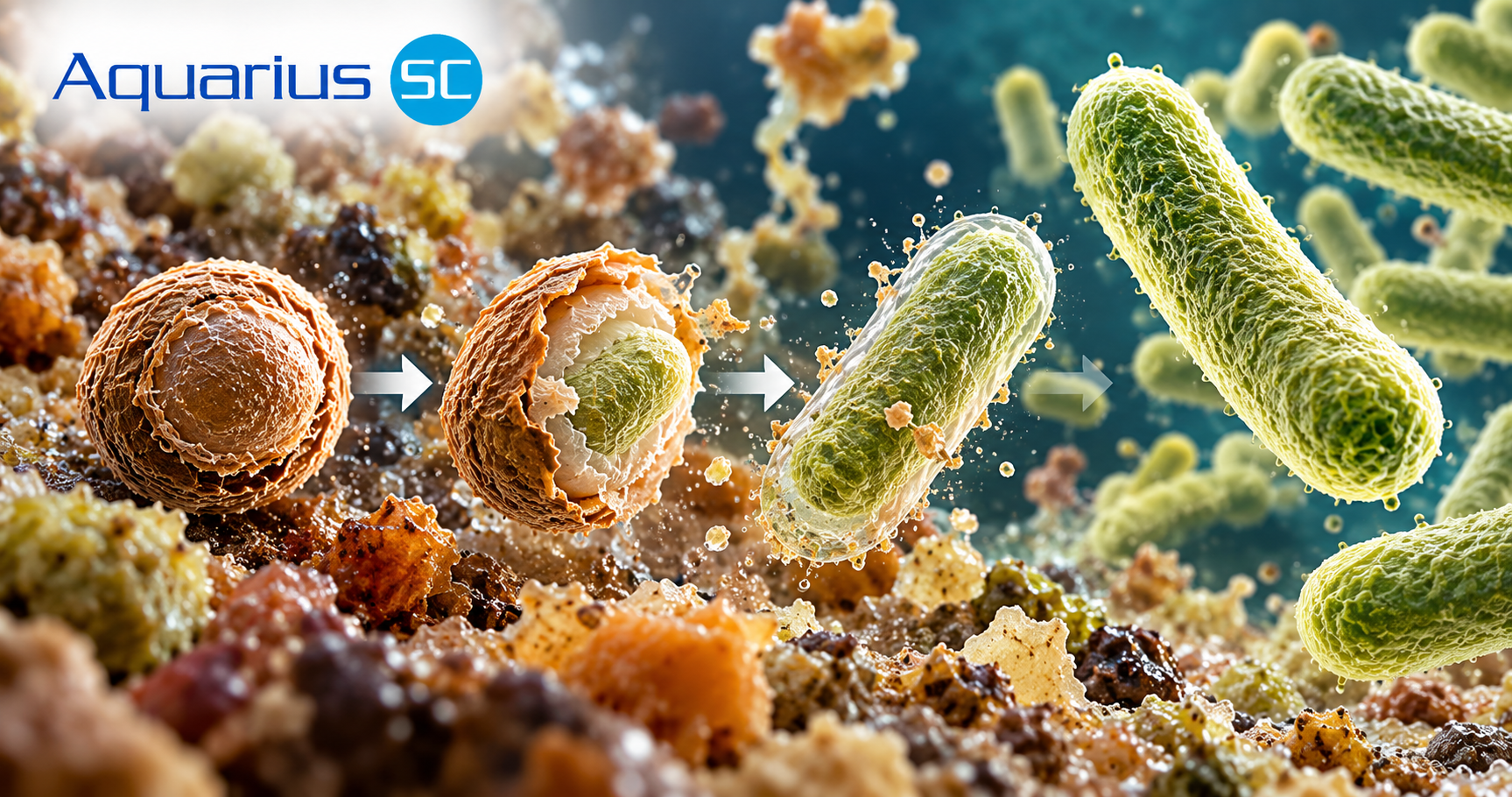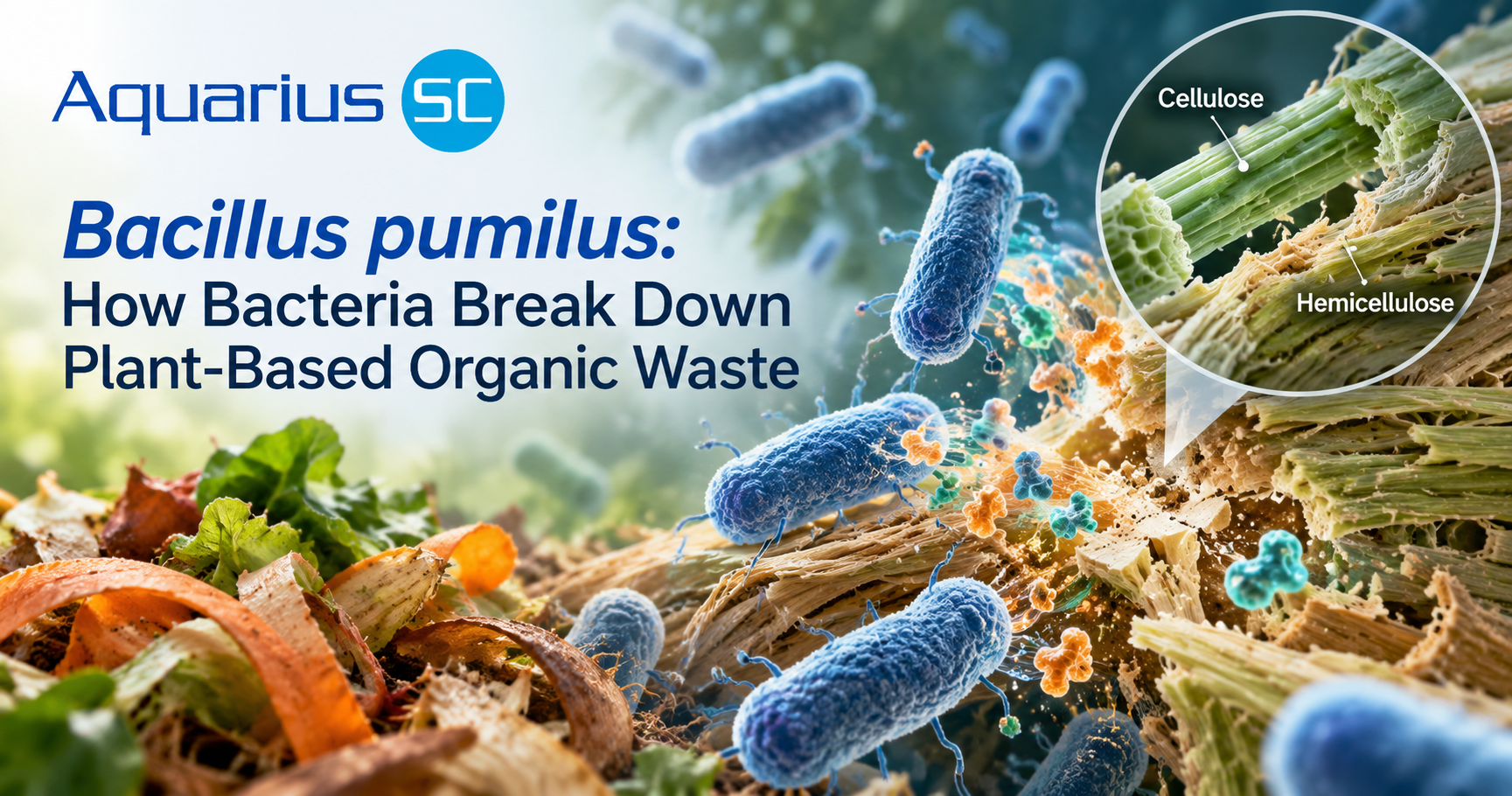
A vegetable peeling, piece of plant fibre or fragment of food waste may appear to be a single material, but its structure contains several different organic compounds. Breaking these substances down requires microorganisms capable of accessing and processing their complex molecular components.
Bacillus pumilus is a bacterial species that has attracted scientific interest for its ability to produce enzymes involved in organic matter decomposition.
Research into selected strains has revealed capabilities associated with the degradation of cellulose, hemicellulose and other plant-derived carbohydrates.
These findings help explain how bacterial enzyme systems contribute to the biological processing of organic waste.
Bacillus pumilus is a rod-shaped bacterium found in soil, plant-associated environments and other natural habitats.
Like many microorganisms involved in nutrient cycling, certain strains can obtain nutrients from complex organic substances by producing extracellular enzymes.
These enzymes act outside bacterial cells, converting larger molecules into smaller compounds that may become available for microbial uptake.
Rather than possessing one universal enzyme profile, different Bacillus pumilus strains exhibit different biochemical capabilities.
Some have been investigated for their ability to degrade plant fibres, making them particularly interesting in research involving agricultural residues and other biodegradable materials.
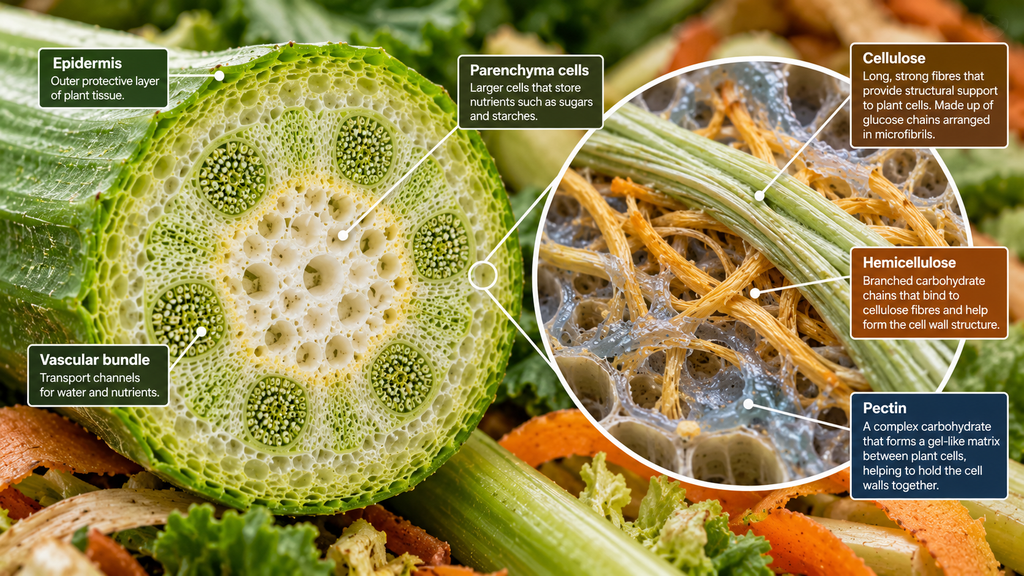
Plant-derived waste contains more than one type of carbohydrate.
Its structural components commonly include cellulose, hemicellulose and pectin, alongside proteins and other organic substances.
These materials differ in their chemical structures and accessibility.
Cellulose forms strong structural fibres, while hemicellulose consists of a more varied group of polysaccharides associated with plant cell walls.
Pectin contributes to tissue structure and the connections between neighbouring plant cells.
Because these compounds contain different chemical bonds, their complete degradation generally requires several complementary enzyme activities.
A microorganism capable of processing multiple components may contribute to the gradual weakening and decomposition of plant material.
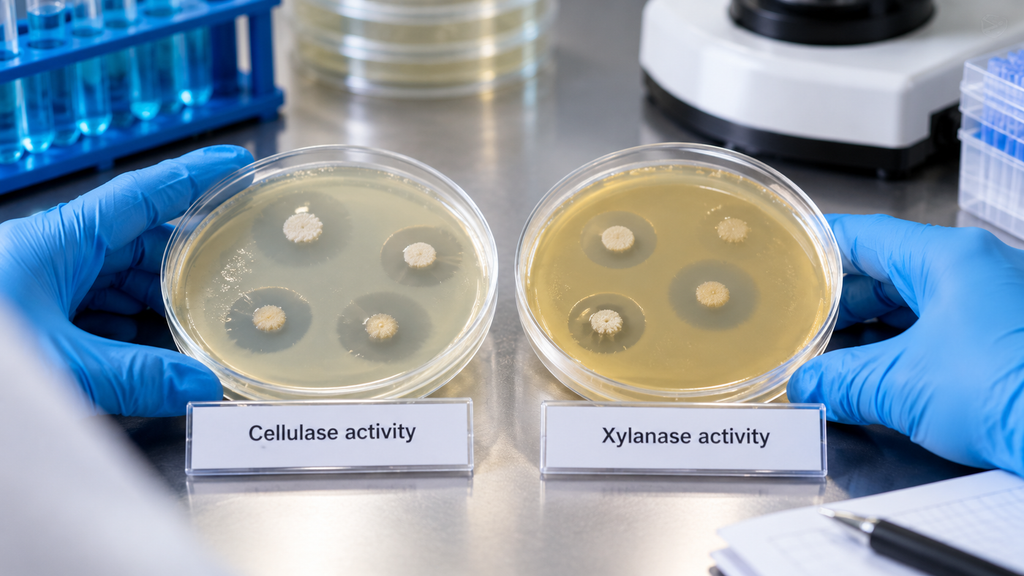
A study published in 2025 investigated a Bacillus pumilus strain, CX9, isolated from agricultural waste compost.
Researchers identified both cellulase and xylanase activities, demonstrating its potential to act on two important components of plant-derived waste.
The study of cellulase and xylanase production by Bacillus pumilus isolated from compost investigated these activities and the conditions influencing their production.
Cellulases catalyse reactions involving cellulose, helping convert accessible fibres into shorter carbohydrates.
Xylanases act on xylan, a major constituent of hemicellulose.
Together, these activities can contribute to the degradation of different carbohydrate structures within the same organic material.
This is particularly relevant to mixed plant residues, where cellulose and hemicellulose occur together.
However, these findings relate to a researched strain and should not automatically be attributed to every Bacillus pumilus isolate.
Xylan contains a backbone primarily composed of xylose sugar units.
Its structure can also include side groups that influence how accessible the main carbohydrate chain is to enzymes.
Certain xylanases hydrolyse bonds within the backbone, producing shorter compounds called xylooligosaccharides.
Additional enzymes may then convert suitable fragments into smaller sugars, including xylose.
These compounds can potentially be absorbed and metabolised by microorganisms possessing the necessary metabolic pathways.
The process is particularly interesting because hemicellulose often occurs alongside cellulose in plant fibres.
Research published in 2026 investigated the structural properties of a Bacillus pumilus glucuronoxylanase and its ability to hydrolyse plant biomass.
The study examined an enzyme capable of processing substituted xylan structures, demonstrating that even within one carbohydrate category, substrate specificity can be important.
The decomposition of plant matter often involves overlapping biological processes rather than a single enzyme acting independently.
As accessible hemicellulose is modified, the arrangement of surrounding plant fibres may change.
This can influence the accessibility of other compounds to microbial enzymes.
Cellulase activity may then contribute to further breakdown of accessible cellulose regions, while other microorganisms process different substances within the material.
However, cellulose and hemicellulose degradation do not automatically remove lignin, another important component of many plant cell walls.
Lignin’s complex structure can limit microbial access to the surrounding carbohydrates.
The overall rate of decomposition therefore depends on substrate structure, enzyme accessibility and the activities of the microorganisms present.
Researchers have also investigated the genetic capabilities of individual Bacillus pumilus strains.
One study examining strain 64-1 identified numerous genes associated with carbohydrate-active enzymes.
These included genes potentially involved in the processing of cellulose, xylan and pectin, alongside other organic substrates.
The genomic investigation of the carbohydrate-degrading potential of Bacillus pumilus strain 64-1 illustrates the range of biochemical activities that may be encoded within an individual bacterial genome.
However, identifying a gene does not necessarily demonstrate that the corresponding enzyme is produced under every environmental condition.
Actual substrate degradation must be established through appropriate experiments.
This distinction is important when evaluating bacterial capabilities for biological treatment.
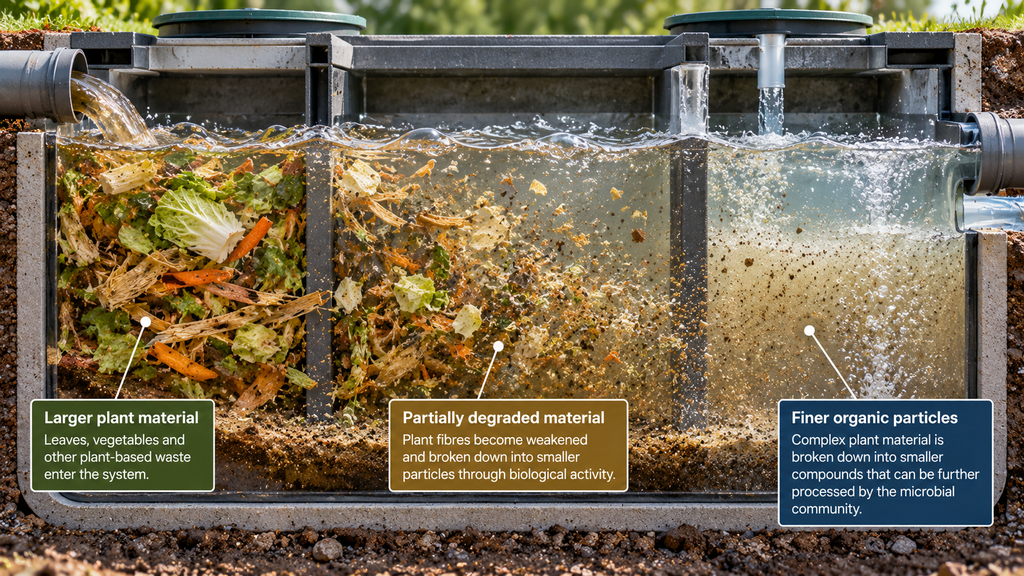
Wastewater may contain plant-derived organic substances from food preparation, washing and other activities.
Although the composition varies between properties, plant residues can introduce cellulose, hemicellulose and other carbohydrates into the wastewater stream.
Microorganisms with suitable enzyme activities may contribute to the gradual processing of these compounds.
Extracellular enzymes can make complex substrates more accessible, allowing further microbial activity to take place.
However, environmental conditions and substrate accessibility influence the extent of decomposition.
Biological processing also occurs within a wider microbial community, where different organisms may perform complementary metabolic functions.
Aquarius SC uses selected microbial cultures associated with several organic waste-degrading enzyme activities.
Scientific research into Bacillus pumilus illustrates how individual bacterial strains may possess different capabilities for processing complex organic material.
Its investigated cellulase and xylanase activities provide examples of the wider biological mechanisms involved in plant carbohydrate decomposition.
These findings complement the principles behind combining different microbial capabilities to process the organic materials present in wastewater.
Aquarius SC identifies cellulase among its documented enzyme activities, although xylanase is not separately listed.
The available product information also does not confirm whether Bacillus pumilus is specifically included in its sachets.
The research therefore explains relevant microbial mechanisms rather than identifying a verified individual strain within the product.
Research into Bacillus pumilus demonstrates why complex organic materials often require multiple biochemical reactions.
Plant fibres contain interconnected substances with different molecular structures, and their decomposition depends on enzymes capable of acting on those individual components.
Selected Bacillus pumilus strains demonstrate how bacteria can participate in this process through cellulose- and hemicellulose-degrading activities.
This makes the species a useful example of how microbial enzyme diversity contributes to organic matter decomposition and biological nutrient recycling.