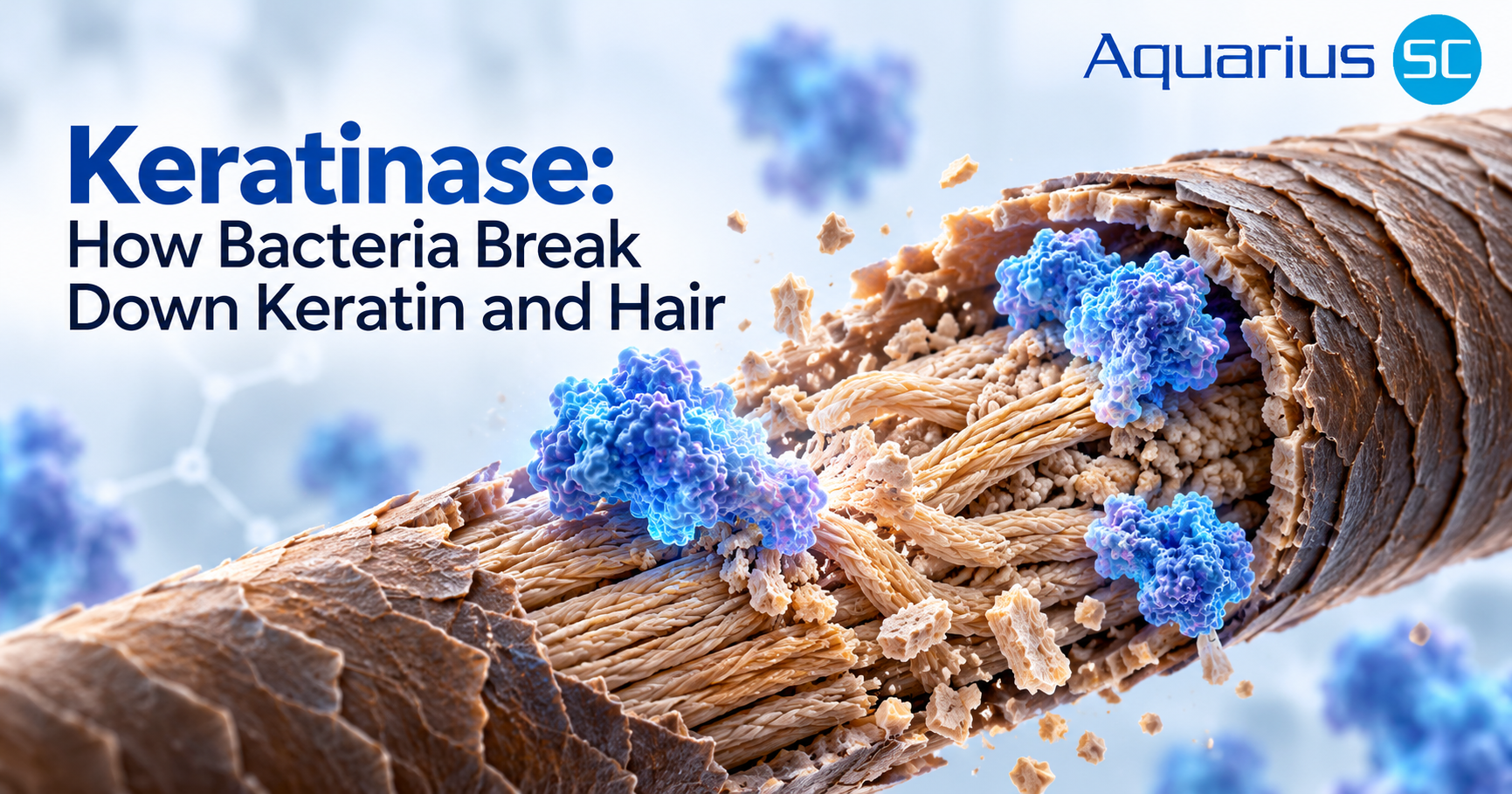
Hair is remarkably resistant to natural decomposition. Unlike many other organic materials, it contains tightly structured proteins that can remain intact for extended periods, even when exposed to moisture and microorganisms.
However, certain bacteria produce specialised enzymes capable of acting on these resistant proteins. One of the most important is keratinase, an enzyme involved in breaking down keratin-containing materials.
Keratinase is one of six enzyme activities identified in the Aquarius SC biological formulation. Its function demonstrates how microorganisms can contribute to the decomposition of particularly resistant organic substances in wastewater environments.
Keratinase is a specialised proteolytic enzyme capable of hydrolysing keratin, a structural protein found in hair, feathers, wool, nails and other animal-derived materials.
Although keratinase belongs to the broader category of protein-degrading enzymes, it is distinguished by its ability to act on keratin-rich substrates.
Keratin’s tightly organised structure makes it considerably more resistant to degradation than many ordinary proteins.
A scientific review of microbial enzymes involved in keratin degradation examines the different enzyme families involved and the biological mechanisms responsible.
Keratinase activity is particularly significant because keratin-containing waste occurs naturally in both domestic and industrial environments.
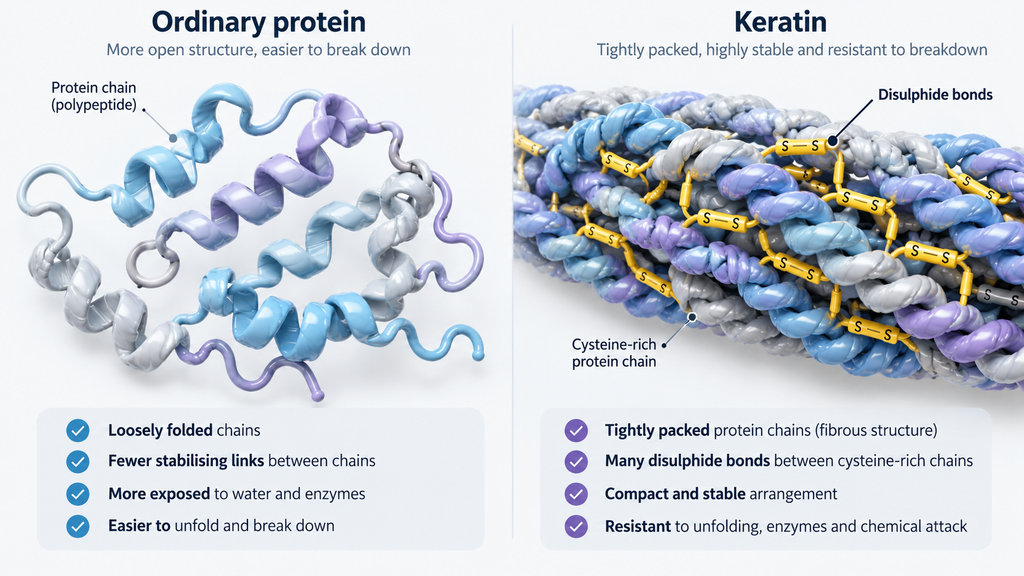
Keratin’s resistance comes from its molecular structure.
The protein contains amino acid chains stabilised by several interactions, including strong disulphide bonds formed between cysteine residues.
These chemical connections help maintain the protein’s strength and structural integrity.
Consequently, keratin does not readily dissolve in water and is resistant to many conventional protein-degrading enzymes.
This explains why human hair can remain relatively intact long after other biodegradable materials have started decomposing.
Keratin degradation therefore frequently requires a combination of biochemical activities rather than a single reaction.
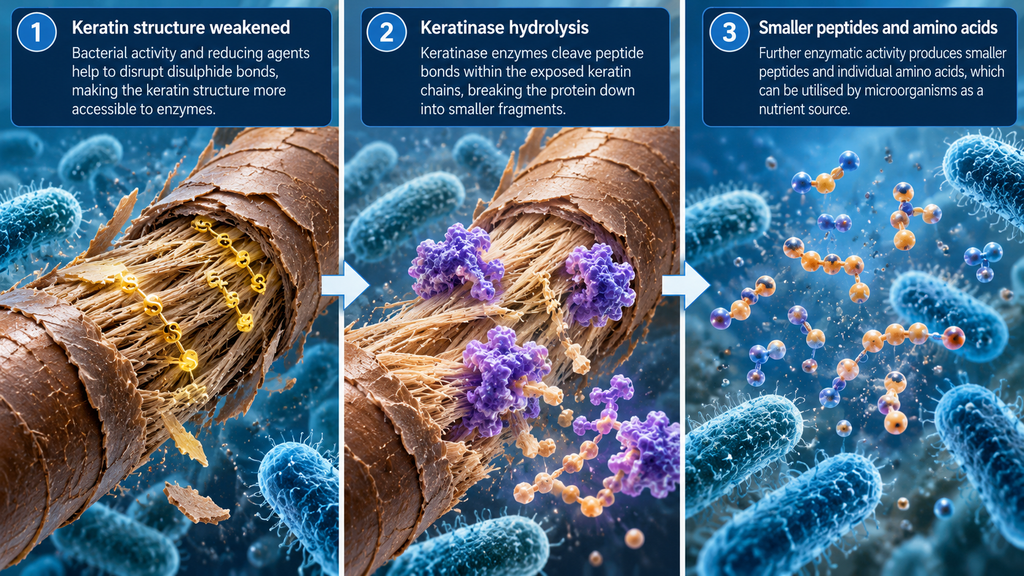
Certain microorganisms can produce keratinolytic enzymes that act on resistant keratin structures.
The biological process commonly involves several stages:
Keratinase primarily catalyses peptide-bond hydrolysis. Disulphide bond disruption often involves additional microbial processes.
Research on keratinase mechanisms and microbial waste valorisation discusses these complementary mechanisms and their importance in processing resistant biological materials.
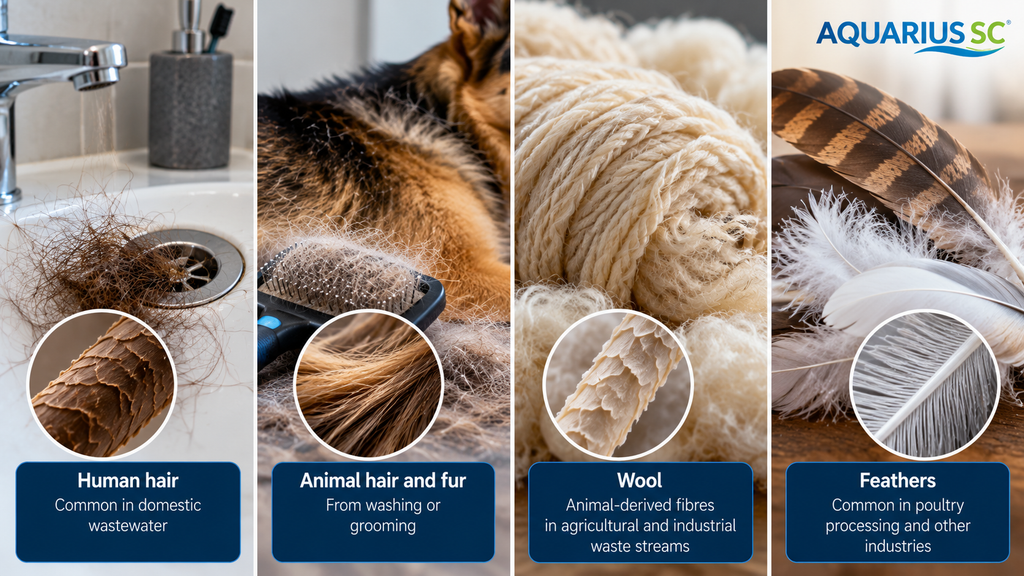
Keratin-containing substances occur across domestic, agricultural and industrial environments.
Common examples include:
In domestic wastewater, hair is particularly relevant because loose strands can accumulate around drain fittings and combine with soap residues or grease.
Commercial grooming salons and animal-care facilities may encounter greater quantities of hair-containing waste.
However, keratinase activity does not mean these materials should deliberately enter drainage systems.
Aquarius SC contains selected microbial cultures associated with six enzyme activities: amylase, protease, cellulase, lipase, pectinase and keratinase.
Each targets different types of organic substances.
Keratinase contributes an activity relevant to resistant keratin-containing proteins, complementing enzymes involved in processing carbohydrates, fats and other proteins.
This diversity reflects the purpose of combining microorganisms with different waste-degrading capabilities in Aquarius SC.
The published formulation identifies keratinase activity but does not establish how quickly hair or other keratin-rich materials are degraded under typical septic tank conditions.
It would therefore be misleading to promise complete hair removal or claim that the product can clear existing hair blockages.
Several bacterial groups include keratinase-producing microorganisms.
Research has identified keratinolytic activity in certain strains of Bacillus licheniformis, Bacillus subtilis and other bacterial species.
However, enzyme production varies substantially between individual strains.
A bacterium belonging to a known keratinase-producing species does not automatically possess the same degradation capabilities as every other strain.
The Aquarius Microbial Magic eBook identifies several Bacillus species associated with the wider product range, but the precise bacterial species contained in Aquarius SC sachets remain unconfirmed.
Protease is a broad term describing enzymes that break peptide bonds within proteins.
Keratinase refers to proteolytic enzymes capable of acting on the unusually resistant structure of keratin.
Many conventional proteases can degrade accessible proteins but have limited activity against intact keratin fibres.
Keratinases possess properties that allow them to participate in keratin degradation, often alongside other microbial mechanisms.
Consequently, the distinction concerns substrate accessibility and degradation capability rather than two completely unrelated categories of enzymes.
Several factors influence microbial keratin degradation.
Temperature: Enzyme activity varies with temperature, and excessive heat can damage protein structures.
pH: Different keratinases operate most effectively within particular acidity or alkalinity ranges.
Keratin structure: Hair, feathers and other substrates vary in their accessibility and resistance.
Microbial activity: Living bacteria require suitable environmental conditions to produce enzymes and maintain metabolism.
Additional biochemical processes: Effective degradation may depend on mechanisms that disrupt disulphide bonds.
A review of microbial keratinases for processing feather waste explores how microbial characteristics and treatment conditions influence keratin degradation.
Keratinase may contribute to the biological degradation of accessible keratin, but it should not be regarded as a guaranteed drain-unblocking treatment.
Hair blockages often contain tangled fibres, soap residues and other substances that restrict water flow.
Their physical structure can limit how effectively biological processes reach individual strands.
Established blockages may require mechanical removal or professional drainage maintenance.
Using hair catchers and preventing excessive hair from entering drains remain more reliable preventative measures.
Certain microorganisms can degrade keratin-containing materials using specialised enzymes, although the process varies considerably with environmental conditions.
Not necessarily. Keratinase acts on accessible keratin proteins, but complete degradation depends on other biochemical processes and sufficient exposure.
Keratinase is one of the six enzyme activities identified in Aquarius SC’s published formulation.
Keratinase demonstrates how specialised microbial enzymes can act on organic materials that resist ordinary biological decomposition.
Its ability to participate in keratin degradation makes it relevant to understanding the processing of hair, feathers and other resistant protein-based materials.
Within Aquarius SC, keratinase activity contributes to the formulation’s broader range of biological waste-degrading capabilities, although practical performance depends on the material and conditions involved.