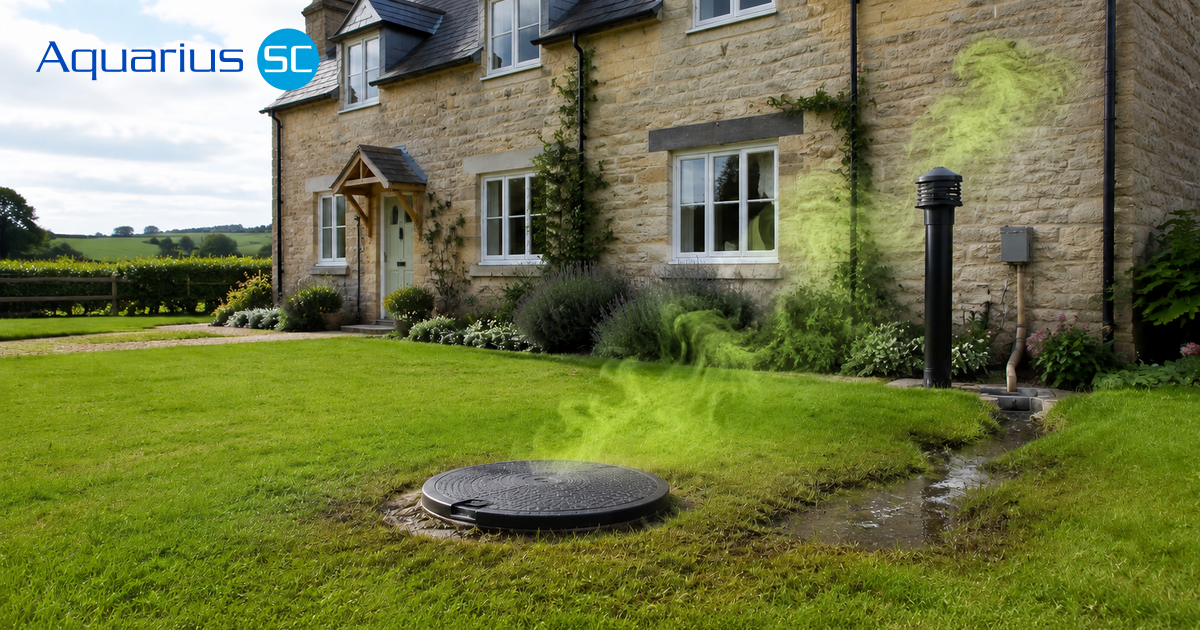
Most homeowners notice a septic tank smell long before they experience a more obvious problem such as wastewater backing up or standing water around the soakaway.
That can be reassuring, because unpleasant odours are often an early warning rather than evidence that a septic system has failed. Identifying the source of the smell early gives you a better opportunity to investigate the cause and, where appropriate, make changes before the issue develops further.
The difficulty is that a septic tank smell does not always originate from the tank itself. Ventilation, wastewater usage, ground conditions and routine maintenance can all influence how noticeable odours become.
This guide explains why septic tanks can smell, how to recognise the different causes and what practical steps may help reduce the problem.
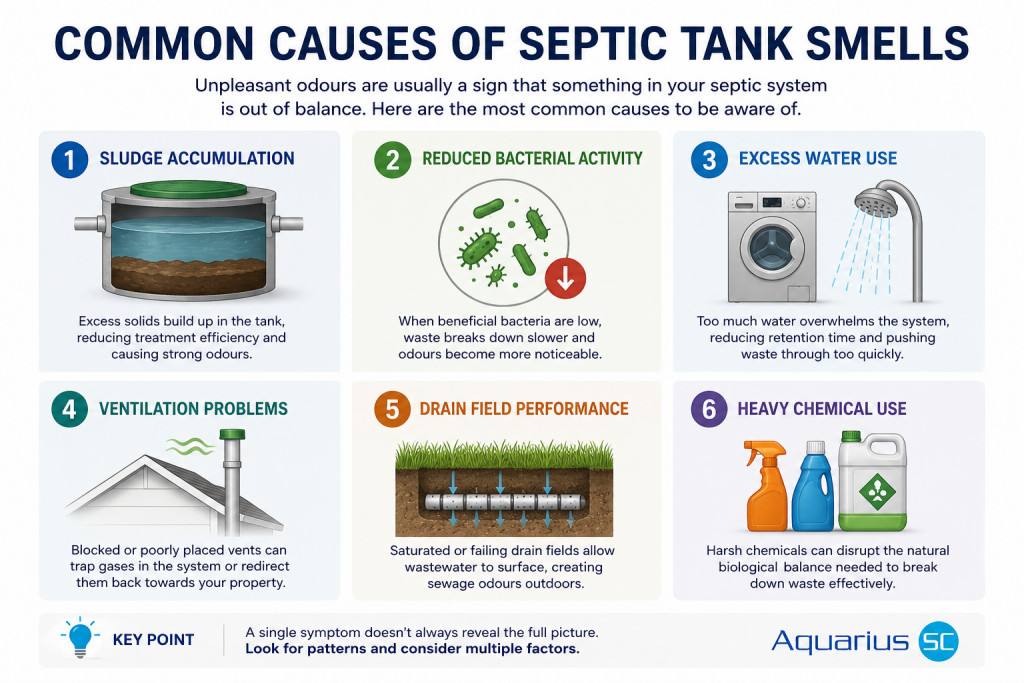
| Possible Cause | Typical Signs |
|---|---|
| Sludge accumulation | Strong odour near inspection covers |
| Reduced biological activity | Smells accompanied by slower drainage |
| Excess household water use | Odours after showers or washing |
| Ventilation problems | Smells close to the property |
| Drain field performance | Wet ground with sewage odours |
| Chemical imbalance | Temporary change after heavy cleaning |
A single symptom does not always identify the underlying cause. Looking at several signs together usually provides a clearer picture of how the system is performing.
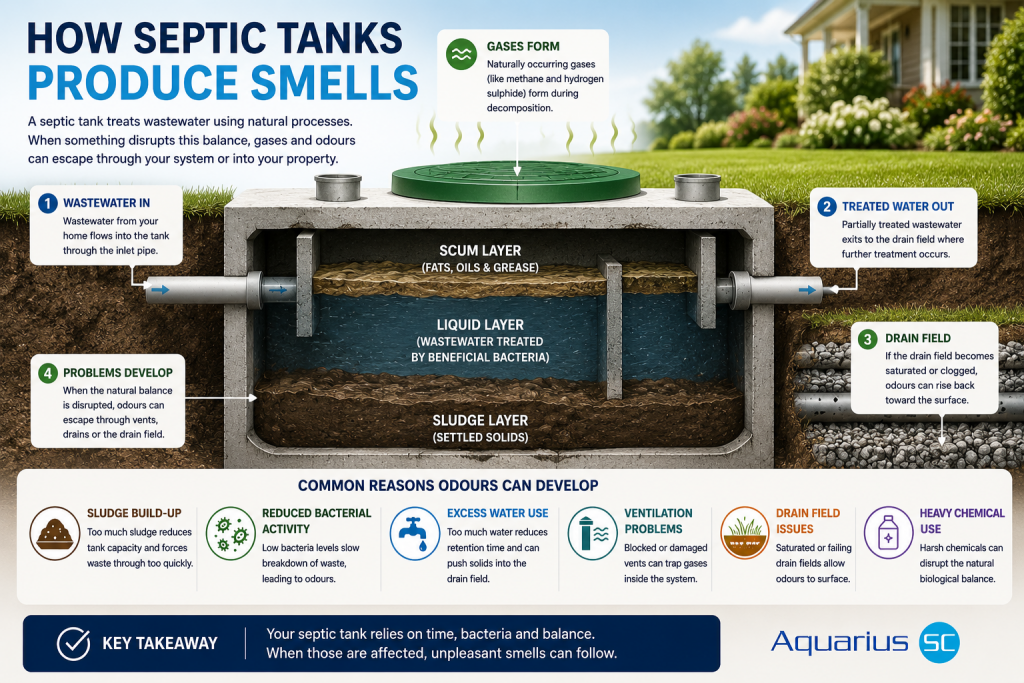
Every septic system naturally produces gases as organic waste is broken down.
Under normal operating conditions those gases are managed through the tank and vent pipe, meaning they are rarely noticeable around the property.
Problems arise when the balance of the system changes.
If wastewater remains inside the tank for longer than intended, organic material is not processed efficiently or gases cannot vent correctly, odours become far more noticeable.
According to the US Environmental Protection Agency, a septic system relies on naturally occurring biological processes to treat household wastewater before it moves into the drain field for further filtration. Their guidance on septic system care explains why routine maintenance and sensible household water use play an important role in maintaining system performance.
https://www.epa.gov/septic/how-care-your-septic-system
Understanding how the treatment process works makes it easier to identify which part of the system may be contributing to the smell.
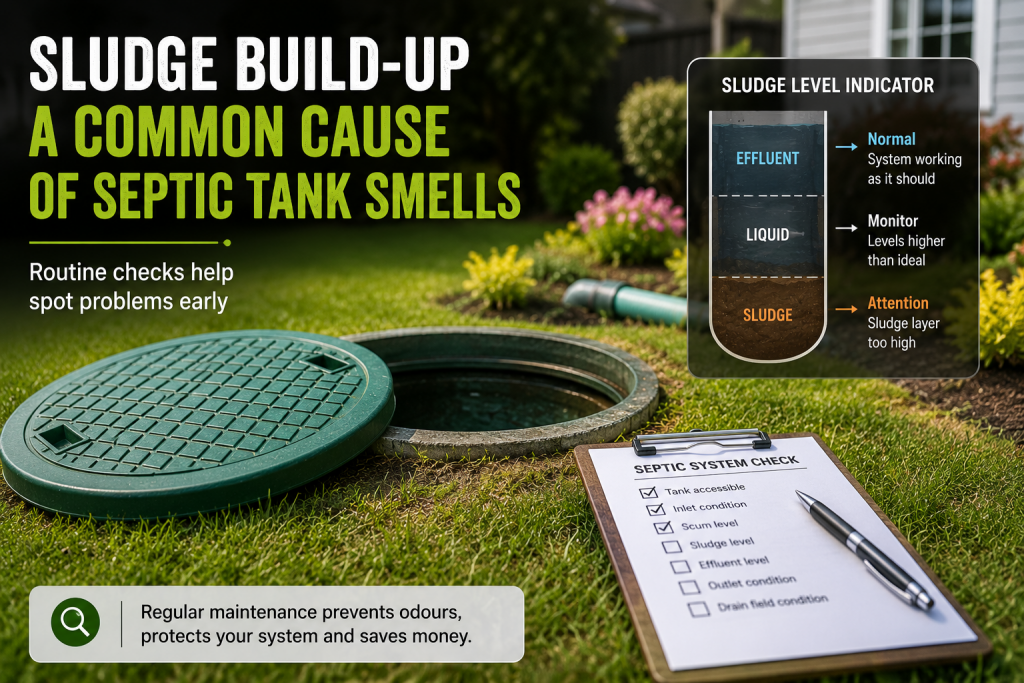
One of the most common causes of a septic tank smell is excessive sludge inside the tank.
Over time, heavier solids naturally settle to the bottom where bacteria gradually break them down. While this process is continuous, not everything decomposes completely.
As sludge levels increase, the amount of available treatment space inside the tank becomes smaller. Wastewater has less time to separate properly before moving towards the outlet, reducing treatment efficiency and increasing the likelihood of unpleasant odours.
Typical warning signs include:
It is important not to assume that every smell automatically means the tank needs emptying. Sludge accumulation is only one possible cause, which is why considering other symptoms alongside the smell is useful.
Routine inspections remain the most reliable way of understanding sludge levels before they begin affecting system performance.
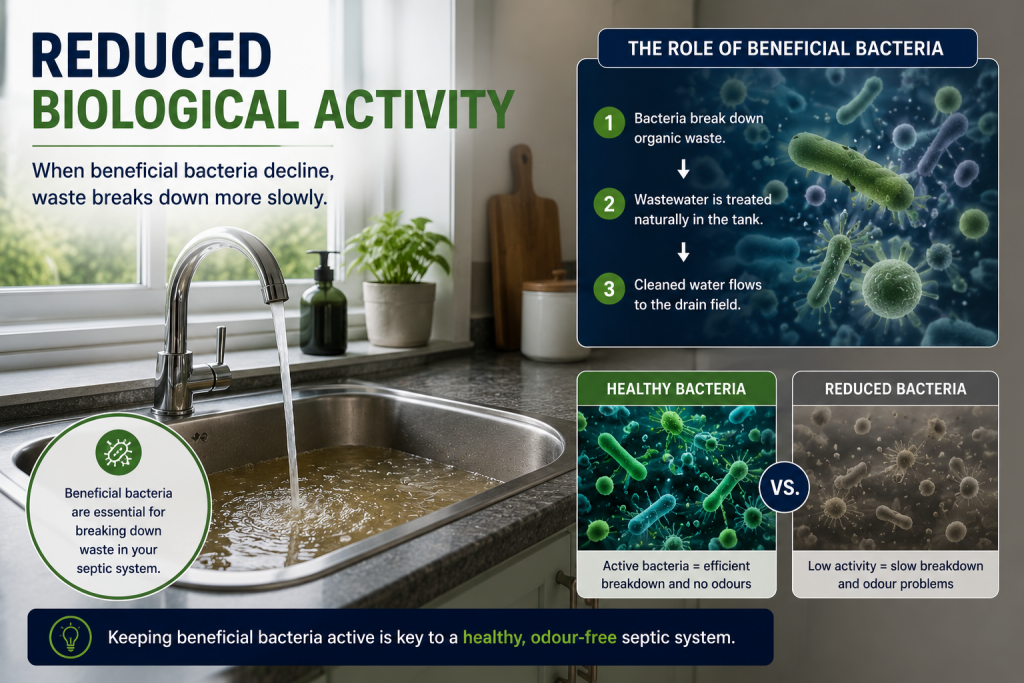
Inside every healthy septic tank are billions of naturally occurring microorganisms.
These bacteria continuously digest organic waste, helping reduce the amount of solid material remaining inside the system before wastewater flows into the soakaway.
When those biological processes become less effective, waste may remain in the tank for longer, increasing the potential for unpleasant smells.
Several factors can influence biological performance, including:
Reduced biological activity does not necessarily mean bacteria have disappeared altogether. More commonly, treatment efficiency changes temporarily while conditions inside the tank stabilise.
If you’re interested in understanding how bacterial populations recover, you may also find our guide on how to restore bacteria in a septic tank useful, where we explore biological treatment in greater detail.
Many homeowners associate septic problems with what goes down the drain.
In reality, how much water enters the system can be just as important.
Every septic tank is designed to retain wastewater for a period of time, allowing solids to separate before partially treated liquid leaves the tank.
Large volumes of water entering within a short period reduce that retention time.
Examples include:
While occasional heavy usage is unlikely to cause permanent damage, repeated hydraulic overload can reduce treatment efficiency and increase the likelihood of noticeable smells.
The US EPA recommends spreading water usage throughout the week where possible rather than concentrating it into one day, helping wastewater move through the treatment process more effectively.
https://www.epa.gov/septic/frequent-questions-septic-systems
A surprising number of septic odours are not caused by the tank itself.
Instead, gases that would normally disperse through the system’s ventilation may become noticeable because airflow has changed.
Possible reasons include:
Because these factors influence where gases travel, a smell near the house does not automatically indicate a fault with the septic tank.
Investigating ventilation before assuming the treatment process has failed can often save unnecessary maintenance.
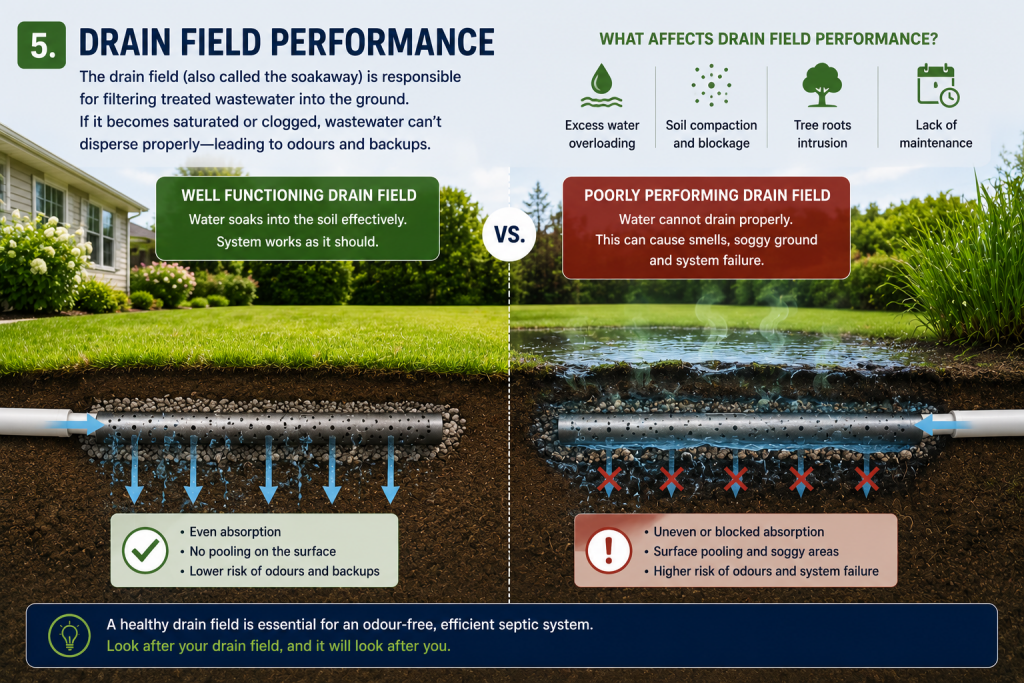
Not every septic tank smell originates inside the tank.
Once wastewater leaves the septic tank, it continues through the soakaway or drain field where naturally occurring microorganisms in the surrounding soil provide further treatment.
If this area becomes overloaded or drains less effectively, wastewater may remain closer to the surface for longer than intended, allowing unpleasant odours to become noticeable.
You may also observe:
Drain field performance can be affected by several factors, including soil conditions, prolonged heavy rainfall, excessive household water use or physical damage caused by vehicles or construction work.
The Irish Environmental Protection Agency recommends preventing surface water from entering domestic wastewater treatment systems wherever possible, as unnecessary water can reduce treatment efficiency.
https://www.epa.ie/take-action/in-the-home/wastewater
Understanding whether the smell is coming from the tank itself or from the drainage area is an important step before deciding what maintenance may be required.
Cleaning products are often blamed whenever a septic tank begins to smell.
The reality is more balanced.
Normal household use of most cleaning products is unlikely to cause immediate problems for a healthy septic system. However, repeatedly introducing large quantities of strong disinfectants or chemicals over a short period may temporarily affect the biological processes responsible for breaking down waste.
Examples include:
Using these products occasionally is very different from disposing of excessive quantities directly into the wastewater system.
Rather than focusing on individual products alone, it is usually more helpful to consider overall household habits and whether several contributing factors may be affecting treatment performance at the same time.
If you would like to understand this subject in greater detail, our guide explaining whether bleach can damage a septic tank explores the relationship between cleaning products and septic system performance.
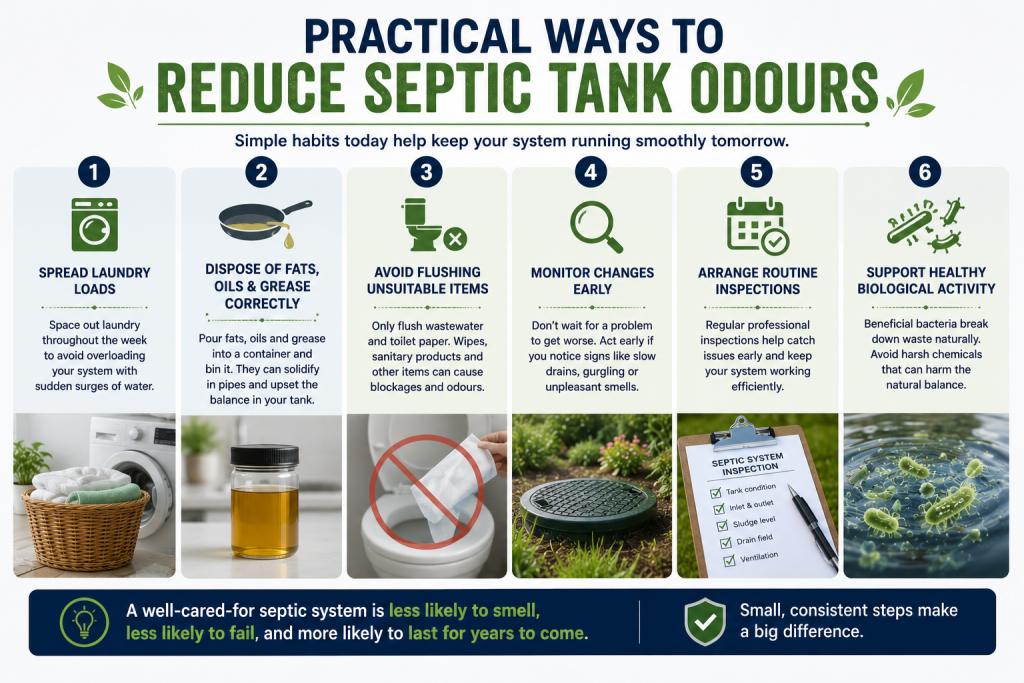
Although every property is different, there are several simple steps that can help reduce the likelihood of unpleasant smells developing.
Running multiple appliances simultaneously increases the amount of wastewater entering the system at once.
Distributing washing machine loads across several days gives wastewater more time to move through the treatment process.
Items such as wet wipes, sanitary products, cooking oils and excessive food waste can increase sludge accumulation and reduce overall treatment efficiency.
Only human waste and toilet paper should routinely enter a domestic septic system.
A slight smell appearing once may not indicate a serious issue.
However, if odours become stronger, drainage slows and damp patches begin appearing together, investigating the system sooner is generally preferable to waiting until more significant symptoms develop.
Periodic inspections provide a clearer understanding of how the system is performing than relying on visible symptoms alone.
Checking sludge levels, inlet and outlet condition and general system performance allows maintenance to be planned before larger problems arise.
The US Environmental Protection Agency recommends regular inspections and maintenance as part of responsible septic system ownership.
https://www.epa.gov/septic/how-care-your-septic-system
Naturally occurring bacteria are responsible for breaking down organic waste inside the tank.
Maintaining suitable conditions through sensible household practices forms the foundation of efficient wastewater treatment.
Where appropriate, biological treatment products may be incorporated into an ongoing maintenance routine alongside routine inspections and responsible household habits rather than being viewed as a substitute for good system management.
If you would like to learn more about biological maintenance, our guide to choosing a septic tank cleaner explains the role treatment products can play as part of an overall maintenance strategy.
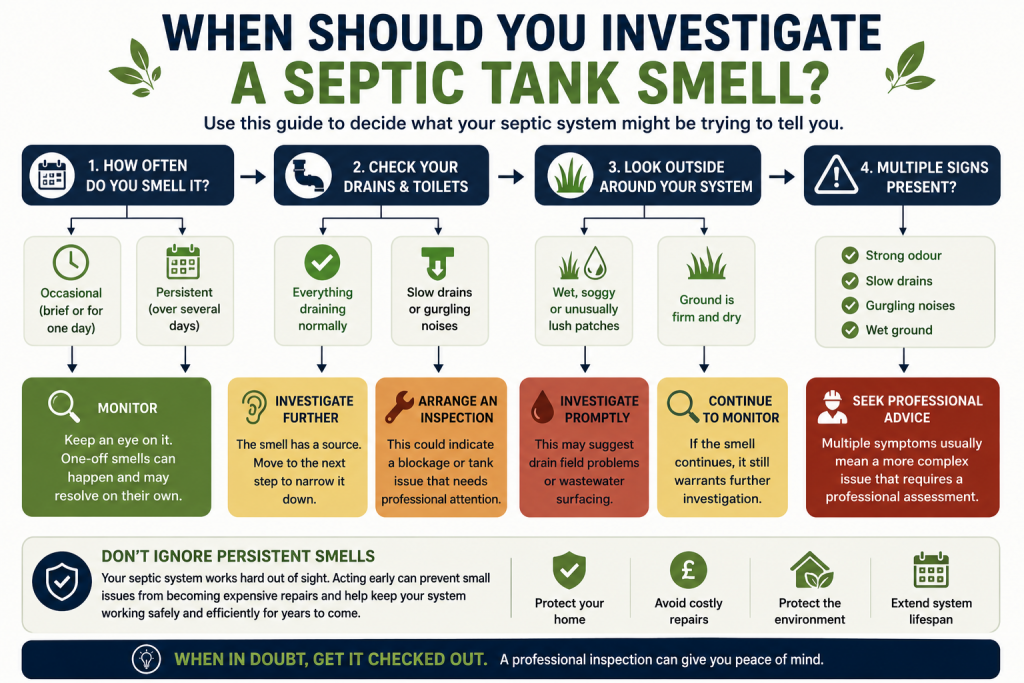
While many odour issues are temporary, certain combinations of symptoms deserve further investigation.
Consider arranging an inspection if you notice:
Early investigation can often identify developing issues before they require more extensive remedial work.
Outdoor odours may originate from the tank, ventilation system or drain field. Identifying where the smell is strongest can help narrow down the possible cause.
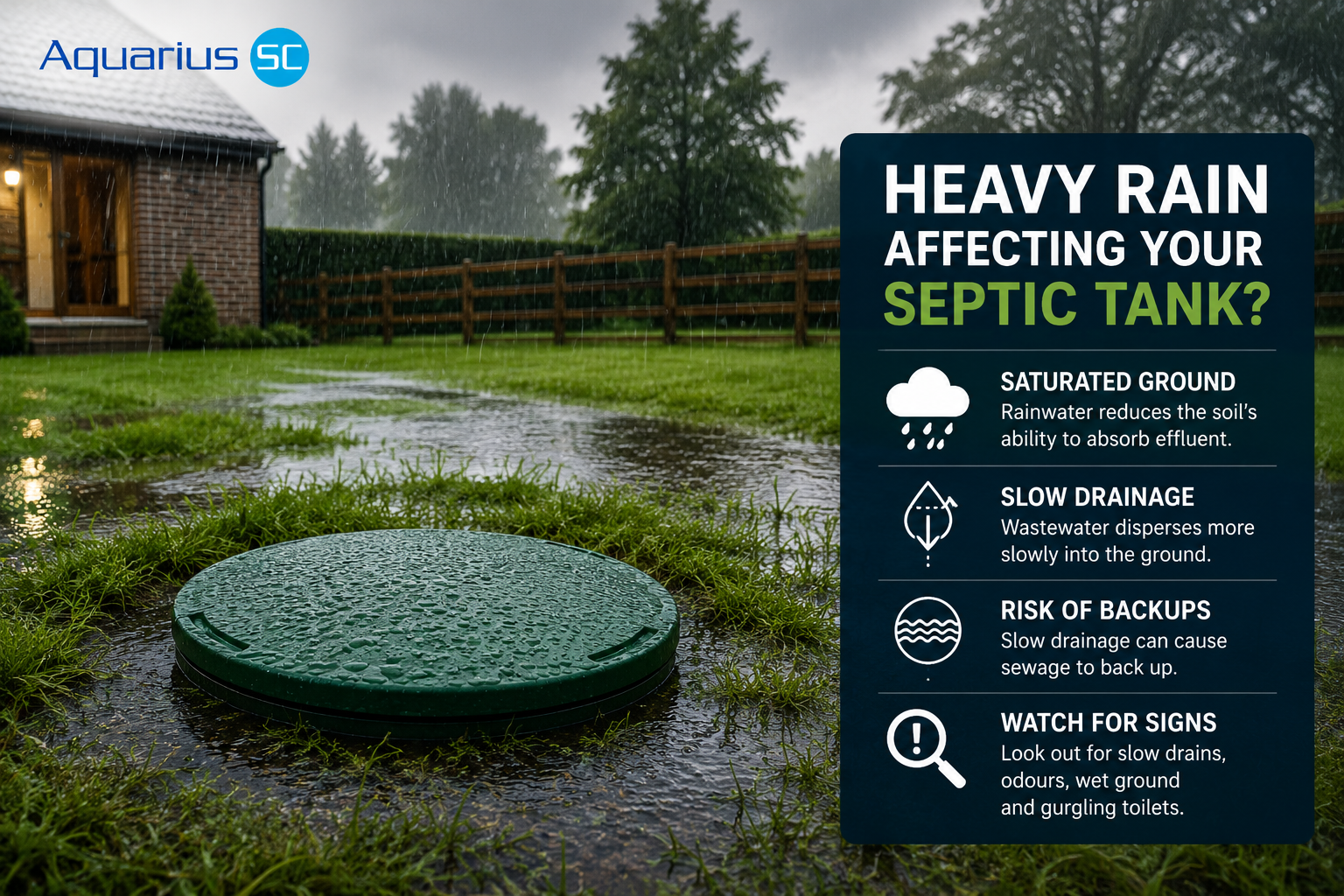
Heavy rainfall can temporarily saturate surrounding soil, affecting how wastewater moves through the drainage area and making naturally occurring gases more noticeable.
As sludge accumulates, treatment efficiency may reduce, potentially contributing to stronger odours. However, a smell alone does not confirm that a tank requires emptying.
Healthy biological activity supports wastewater treatment, but unpleasant odours often result from several contributing factors. Products intended to support bacterial activity should complement sensible household practices and routine maintenance rather than replace them.
Brief outdoor odours are not uncommon, but persistent sewage smells should be investigated to identify the underlying cause and ensure the system is operating as intended.
A septic tank smell is rarely a problem in isolation.
In many cases, it is one of the earliest indicators that something within the wastewater treatment process has changed. Whether the cause relates to sludge accumulation, household water use, ventilation, drain field performance or biological activity, recognising those signs early allows you to investigate before the issue becomes more disruptive.
Good septic system management is built on consistency rather than reactive maintenance. Sensible water usage, appropriate disposal habits, routine inspections and supporting healthy biological treatment all contribute to long-term performance.
By understanding why septic tanks smell and recognising the difference between occasional odours and persistent warning signs, homeowners can make better-informed decisions about maintaining their wastewater system while reducing the likelihood of avoidable problems in the future.