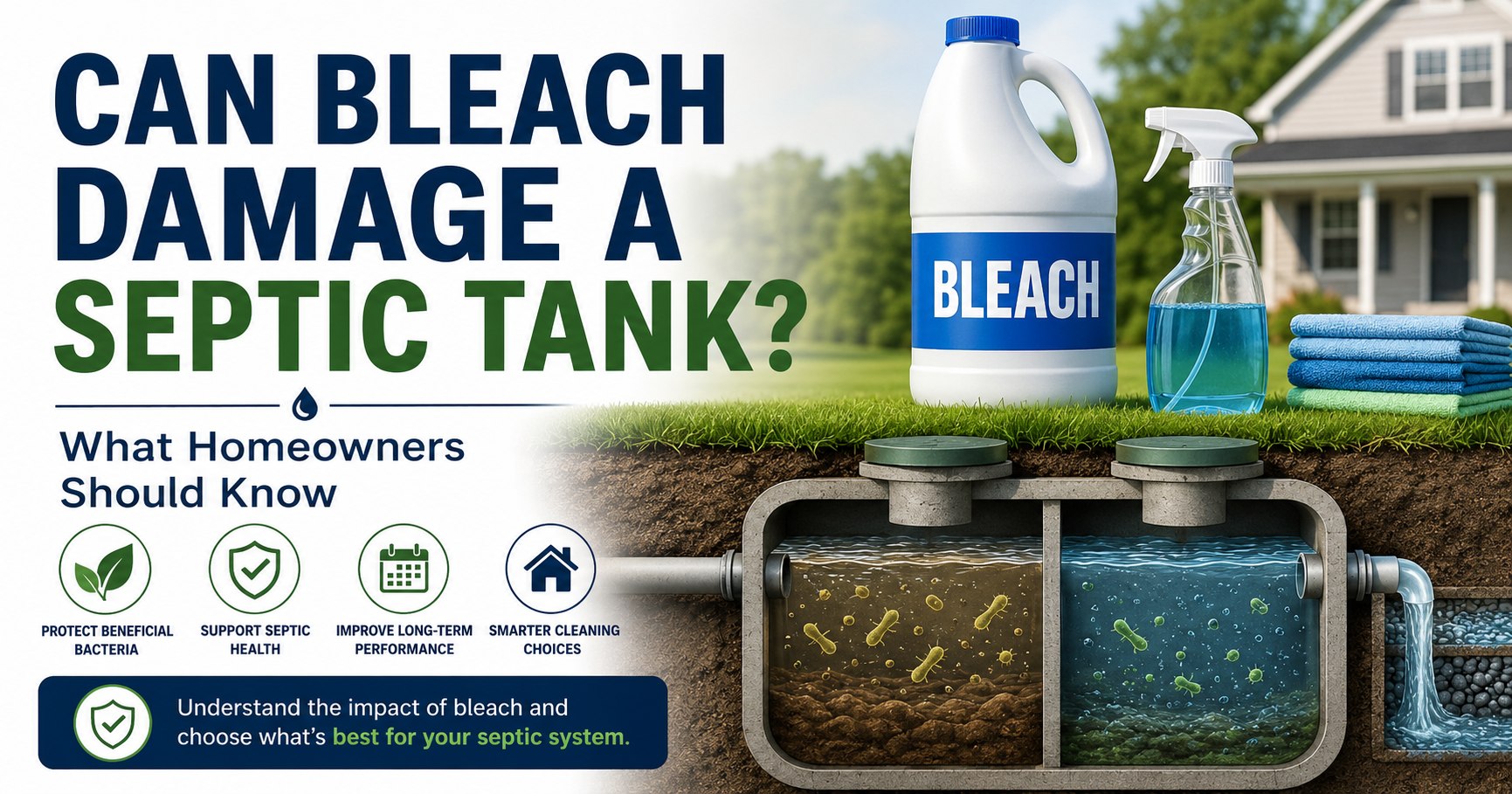
No — using normal household bleach occasionally is unlikely to instantly destroy a healthy septic tank.
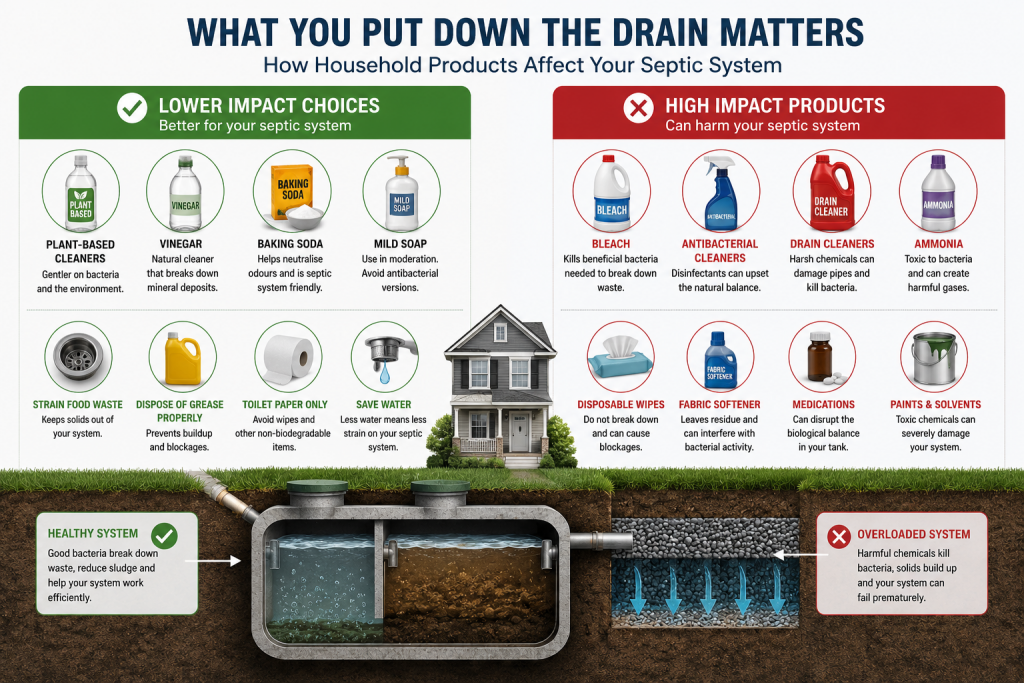
But repeated heavy use of bleach and harsh antibacterial cleaning productsmay interfere with the biological processes that septic systems rely on.
The key issue is not can one bottle of bleach damage a septic tank? It is can repeated heavy use of bleaach damage a septic tank.
It’s long-term chemical loading.
If you own a septic system, understanding that difference can help support healthier treatment performance over time.
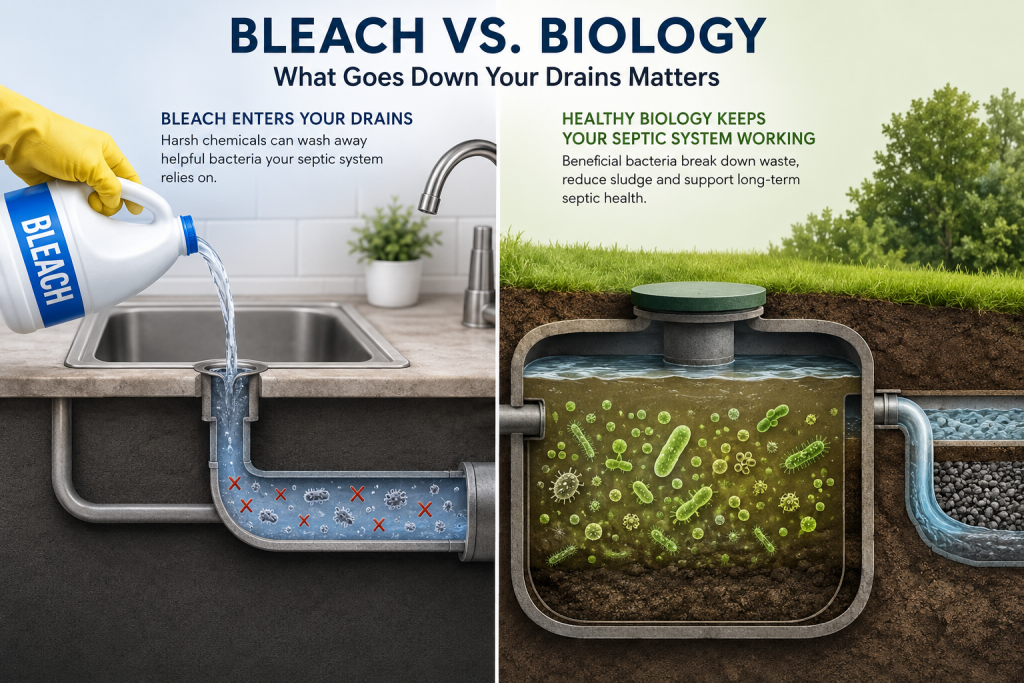
Unlike standard drainage systems, septic tanks rely on naturally occurring microorganisms.
These microorganisms help process:
Inside the tank, bacteria gradually contribute to breaking down waste before liquid moves into the drainage field.
This biological process is one of the reasons septic systems behave differently from standard drainage systems and why cleaning choices can matter more than many homeowners realise.
If you want a deeper explanation of how treatment types, bacteria and long-term maintenance work together, read our complete guide to Septic Tank Cleaner:
Supporting reference:
https://www.netregs.org.uk/environmental-topics/water/septic-tanks/how-septic-tanks-work/
This is where many articles oversimplify.
Bleach is designed to reduce microorganisms.
That’s useful for cleaning.
But septic systems also depend on microbial activity.
Environmental guidance generally focuses less on avoiding bleach entirely and more on avoiding excessive chemical loading.
The concern tends to be repeated exposure to:
Potential outcomes may include:
Reference:
https://content.freshwaterhabitats.org.uk/2015/02/Septic-Tank-WEB.pdf
Not every issue means bleach is responsible.
But warning signs may include:
✔ stronger smells
✔ slower drainage
✔ increased sludge build-up
✔ more frequent maintenance
✔ reduced performance after heavy cleaning cycles
If symptoms continue, inspection should come before treatment.
For most households:
Normal occasional cleaning use is unlikely to immediately cause failure.
The bigger concern tends to be cumulative behaviour.
Examples that may increase loading:
Moderation usually matters more than complete avoidance.
Government guidance:
https://www.gov.uk/permits-you-need-for-septic-tanks/you-have-a-septic-tank-or-small-sewage-treatment-plant
This does not mean your house needs to become chemical free.
The goal is balance.
Good practice may include:
✔ sensible bleach usage
✔ reducing unnecessary antibacterial products
✔ reducing grease loading
✔ following servicing schedules
✔ supporting routine biological maintenance
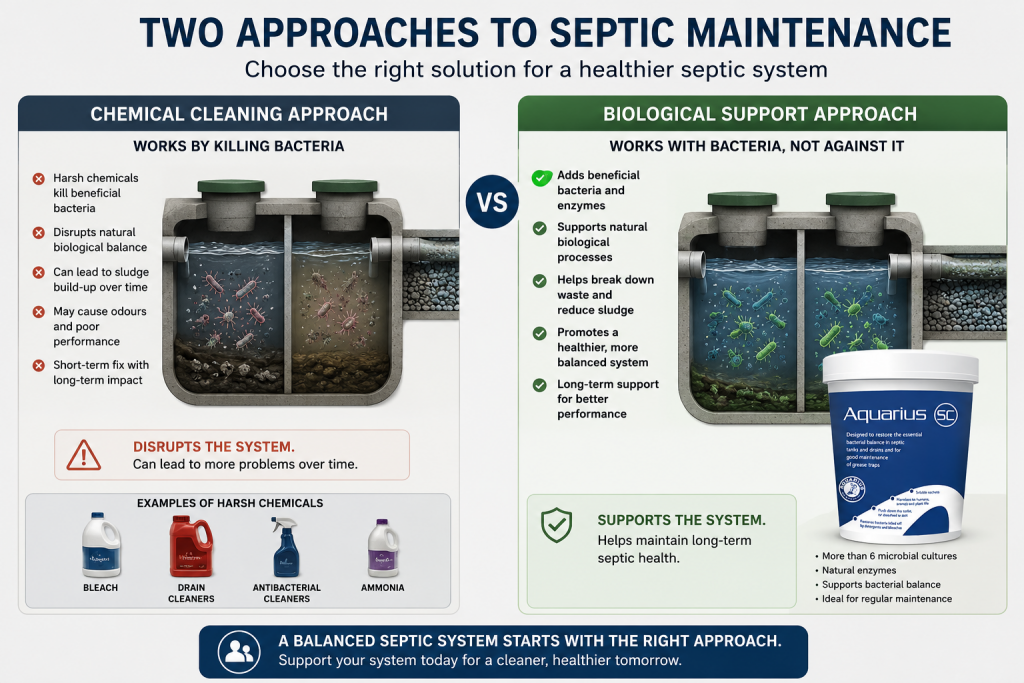
Some homeowners also choose biological maintenance approaches intended to support ongoing treatment processes rather than relying on aggressive chemical action.
If you’re comparing treatment approaches in more detail, our guide to Septic Tank Cleaner explains how biological, enzyme and chemical options differ:
Aquarius SC approaches septic maintenance differently from chemical cleaning.
Rather than attempting to sterilise the system, Aquarius SC is designed as a multi-culture biological maintenance treatment.
According to published product information, Aquarius SC contains:
Published enzyme activity includes:
Supports carbohydrate breakdown.
Supports protein digestion.
Contributes to decomposition of plant fibres.
Supports breakdown of fats and oils.
Helps process plant-derived compounds.
Supports decomposition of tougher organic proteins.
Aquarius SC also contains a culture capable of producing its own biosurfactant.
The aim is not simply adding bacteria.
The intention is supporting the biological environment already processing waste.
If you want to understand the wider context behind biological treatment approaches before choosing a product, read our complete guide to:
→ /septic-tank-cleaner
Explore Aquarius SC:
→ /product/aquarius-sc-sachets
Product information:
https://aquarius4u.com/product/aquarius-sc-sachets
Usually not.
The concern is repeated heavy loading rather than occasional normal use.
Excessive use may interfere with biological activity.
Most guidance focuses on sensible use rather than total avoidance.
Balanced loading, maintenance habits and biological treatment approaches are commonly discussed.
Bleach is not automatically the enemy of septic systems.
But septic tanks are different from normal cleaning environments.
The strongest cleaning routine is not always the healthiest maintenance strategy.
Understanding how biological treatment works — and avoiding unnecessary chemical overload — can help support longer-term septic performance.
If you’re deciding between chemical, enzyme and biological approaches, read our complete guide to Septic Tank Cleaner: