
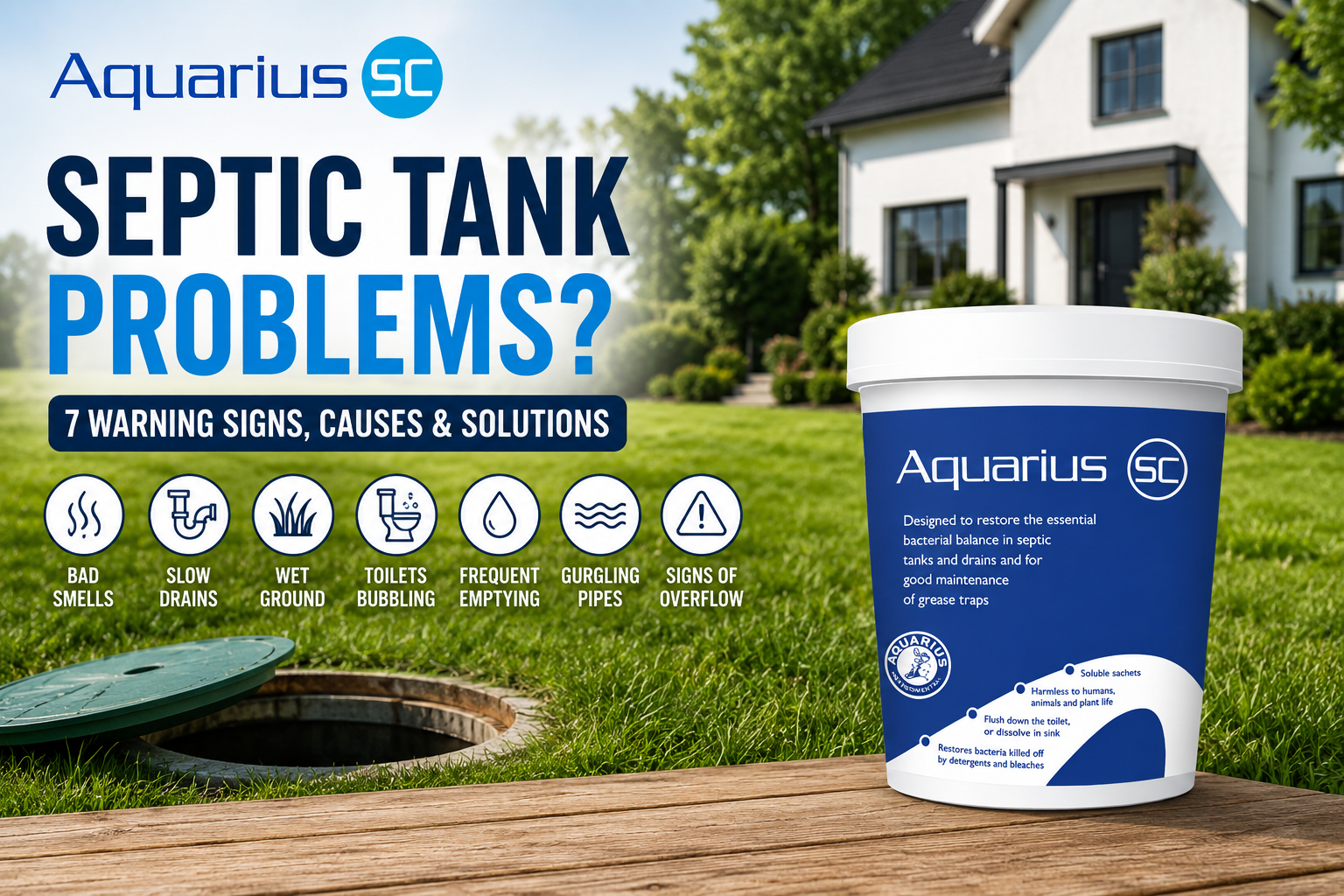
Most septic tank problems don’t begin with a complete system failure.
They usually start with smaller changes that are easy to dismiss — slower drainage, occasional smells, wetter ground around the soakaway, or needing maintenance more often than expected.
The difficulty is that these signs often appear gradually.
Understanding what causes septic tank problems early can help reduce disruption, unnecessary maintenance costs and avoidable system stress.
This guide explains the most common septic tank problems, what may cause them, and practical steps that can help maintain long-term performance.
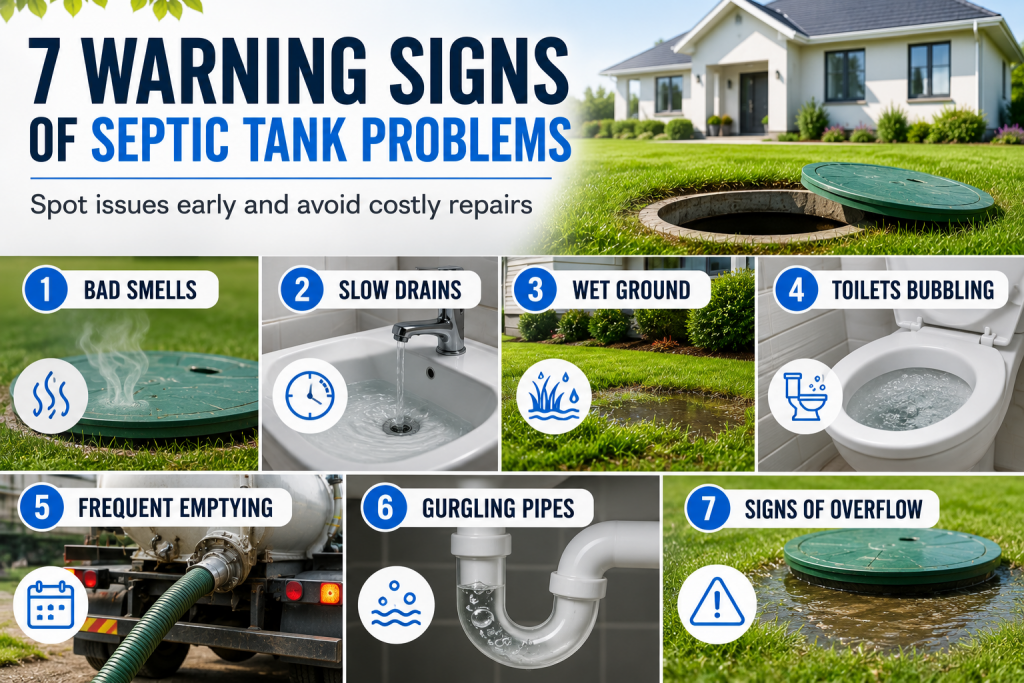
| Symptom | Possible Cause |
|---|---|
| Persistent smells | Reduced treatment efficiency |
| Slow drains | Restricted flow |
| Wet ground | Drainage issue |
| Toilets bubbling | Venting or wastewater restriction |
| Frequent emptying | Increased solids |
| Gurgling pipes | Flow disruption |
| Lush grass above soakaway | Excess moisture |
Multiple symptoms appearing together are usually more useful than focusing on one issue in isolation.
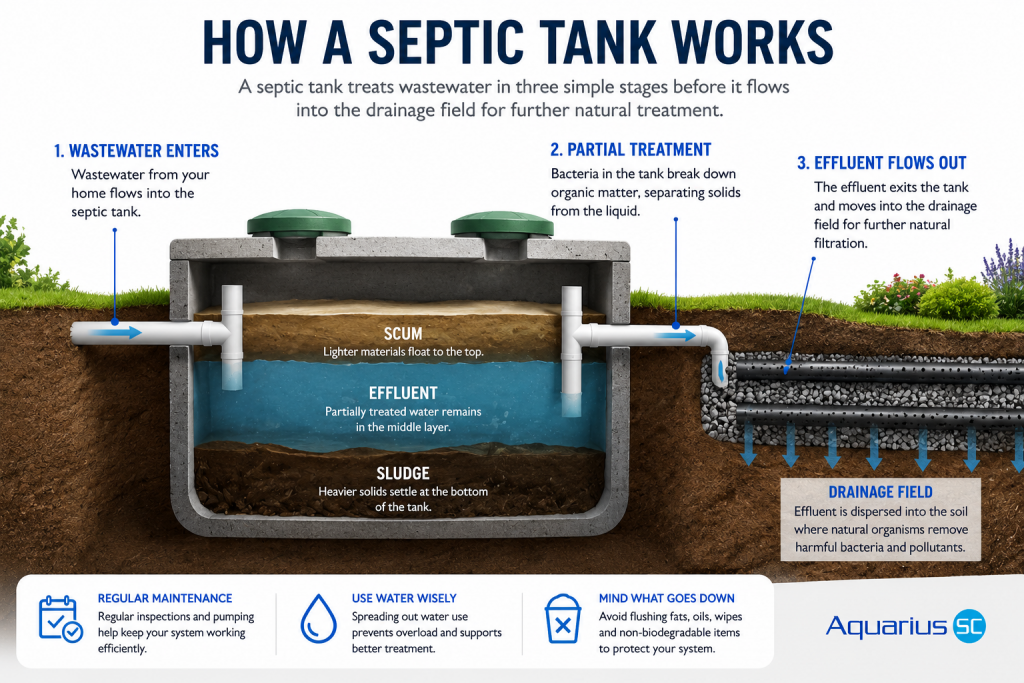
A septic tank is designed to separate household wastewater into three layers:
Materials that float.
Partially treated liquid.
Heavier solids that settle.
Naturally occurring microorganisms help break down organic material before liquid leaves the tank for further treatment.
The process is explained well in the US Environmental Protection Agency’s guidance on caring for septic systems:
How to Care for Your Septic System (US EPA)
Most problems usually fall into one of three categories:
Occasional odours can happen.
Persistent smells are usually worth investigating.
Common descriptions include:
Possible contributing factors:
The Irish Environmental Protection Agency notes that unusual odours can be one indicator that domestic wastewater treatment performance should be reviewed:
Domestic Wastewater Treatment Systems (Irish EPA)
If your focus is specifically maintaining biological activity, see your existing article on restoring bacteria in a septic tank.
One slow sink is often plumbing.
Several slow fixtures at the same time may suggest wastewater movement is becoming restricted.
Typical signs:
Potential causes include:
The US EPA recommends spreading water use across the week rather than creating large surges into the system:
Septic System FAQs (US EPA)
Ground conditions often reveal septic issues before indoor symptoms appear.
Look for:
Potential causes:
The Irish EPA advises keeping external water sources separated from domestic wastewater systems wherever possible:
Domestic Wastewater Guidance (Irish EPA)
Pumping frequency alone does not necessarily indicate a failing system.
Questions worth asking:
The US EPA recommends periodic inspection and maintenance rather than waiting until symptoms appear:
How to Care for Your Septic System (US EPA)
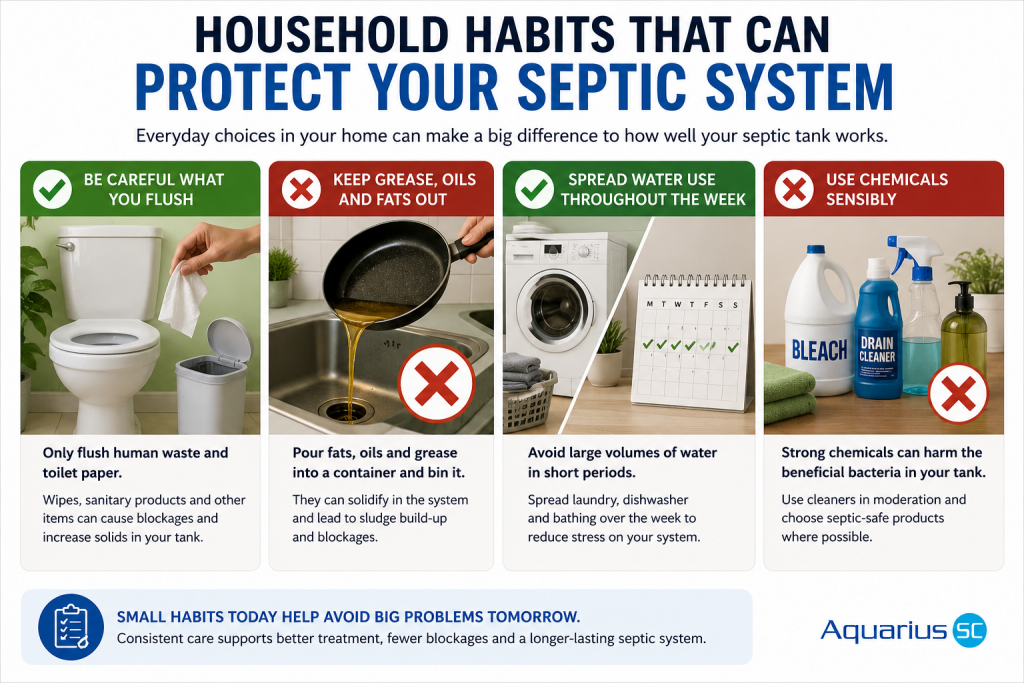
Many septic issues are linked to long-term usage patterns.
Examples include:
Large quantities of strong cleaning chemicals may temporarily reduce treatment efficiency.
Can increase sludge accumulation.
Even products labelled flushable may behave differently inside wastewater systems.
Large volumes entering over short periods increase stress.
If you are specifically researching chemical effects, your bleach article should sit naturally here as an internal link.
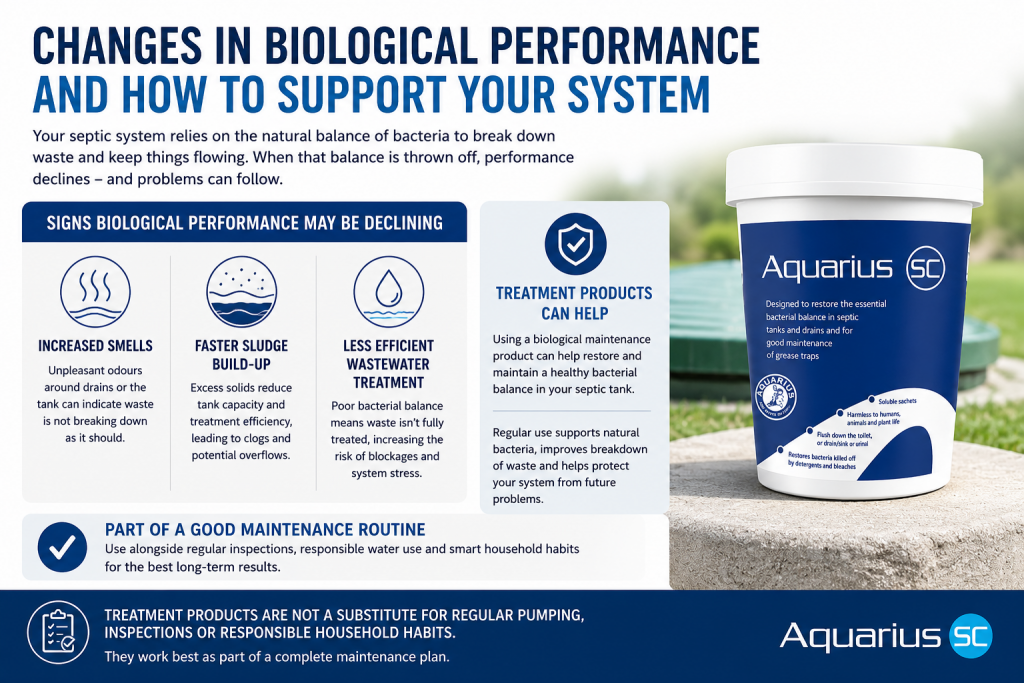
Healthy septic systems depend on naturally occurring microbial processes.
Possible signs of reduced performance:
However, treatment products are not usually considered replacements for maintenance.
The US EPA notes that additives should not replace inspections, pumping and good system care:
Septic Tank Additives Fact Sheet (US EPA)
Your septic tank cleaner article fits naturally as supporting reading here.
Many expensive repairs begin with symptoms that appeared minor.
Examples:
Early identification generally provides more options than waiting for visible failure.
These habits generally support long-term system performance:
✓ Spread water use across the week
✓ Fix leaks promptly
✓ Avoid unsuitable waste entering drains
✓ Reduce unnecessary chemical loading
✓ Arrange inspections where appropriate
✓ Monitor changes in drainage and odour
For UK properties, discharge requirements and wastewater rules can also affect how systems should operate:
General Binding Rules – Septic Tanks And Treatment Plants (GOV.UK)
Slow drainage, smells and sludge accumulation are among the most common reported issues.
Normal use is different from repeated excessive use. Product type, quantity and frequency all matter.
Usually through patterns rather than a single symptom — smells, drainage changes and ground conditions together are stronger indicators.
No. Maintenance routines and sensible household use remain the foundation of long-term performance.
Most septic tank problems develop gradually rather than appearing suddenly.
Recognising early warning signs and understanding what influences wastewater treatment performance can help reduce avoidable maintenance and keep systems operating more consistently over time.