
Discovering that your septic tank may not meet environmental regulations can be worrying, particularly when you are selling a property or dealing with drainage problems. However, non-compliance does not automatically mean prosecution or an immediate replacement. The outcome depends on the problem, whether pollution is occurring, the location of the property and the steps taken to correct it.
Understanding your responsibilities helps you identify the appropriate solution before an avoidable issue becomes more serious.
A septic tank may fail to meet the relevant requirements because of its discharge arrangement, operating condition, capacity or missing authorisation. These are separate issues and may need different solutions.
Examples include a conventional septic tank discharging directly into a stream, a damaged tank leaking sewage, an overloaded drainage field or a system operating without a required permit, registration or consent.
Older installations are not automatically exempt. Equally, a missing document does not prove the tank itself is defective. Establish exactly what is wrong before arranging expensive alterations.
In England, many small domestic discharges do not need an individual environmental permit when they satisfy all applicable general binding rules. These cover matters such as treatment, discharge destination, pollution prevention and maintenance.
If your system fails those rules, you must investigate suitable changes. Depending on circumstances, that could mean repairing equipment, installing an appropriate drainage field, replacing the treatment system or connecting to a public foul sewer where reasonable.
The Environment Agency guidance on discharges to the ground explains both the requirements and the approach to enforcement.
An environmental permit may be necessary where the rules cannot be met. It is not simply an alternative to making reasonable improvements: the Environment Agency can refuse an application where the system could comply with the rules instead.
Potentially. If a sewage discharge causes pollution, an environmental offence may have occurred. The Environment Agency says it will offer advice about correcting the problem and may take enforcement action if pollution continues.
The response is not identical in every case. Regulators consider the circumstances, environmental risk and relevant legislation. Serious or persistent breaches can have consequences beyond the cost of repairs.
Do not assume a fixed fine applies to every defective system. Promptly investigating and addressing the cause is more useful than speculating about penalties.
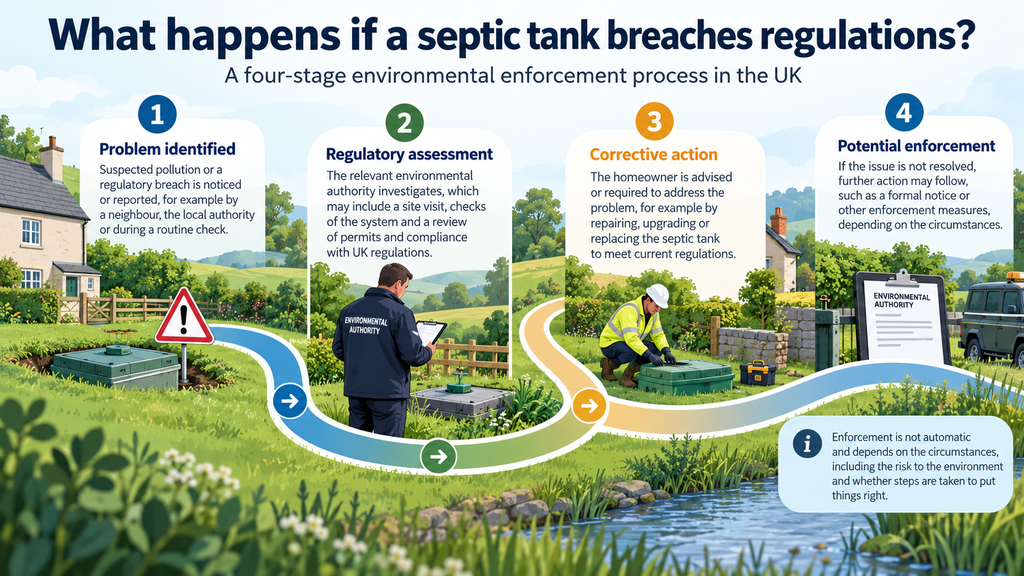
Start by identifying the system and the reason for concern. Record visible problems, but avoid entering tanks or opening equipment that could expose you to hazardous gases or wastewater.
A practical sequence is:
If sewage is overflowing or reaching a watercourse, treat the situation urgently. Keep people and animals away from contamination and contact the relevant regulator or local authority for advice.
A professional inspection can identify technical defects, but it cannot automatically certify legal compliance across every jurisdiction.
If neighbours share the installation, agree who will arrange an inspection and preserve access for contractors. Environmental duties and private cost-sharing arrangements are not always identical. Check property documents before assuming one household must fund everything, especially where pipework crosses neighbouring land during urgent repairs.
Not necessarily. The solution depends on whether the problem concerns equipment, drainage capacity, treatment quality or the legal discharge route.
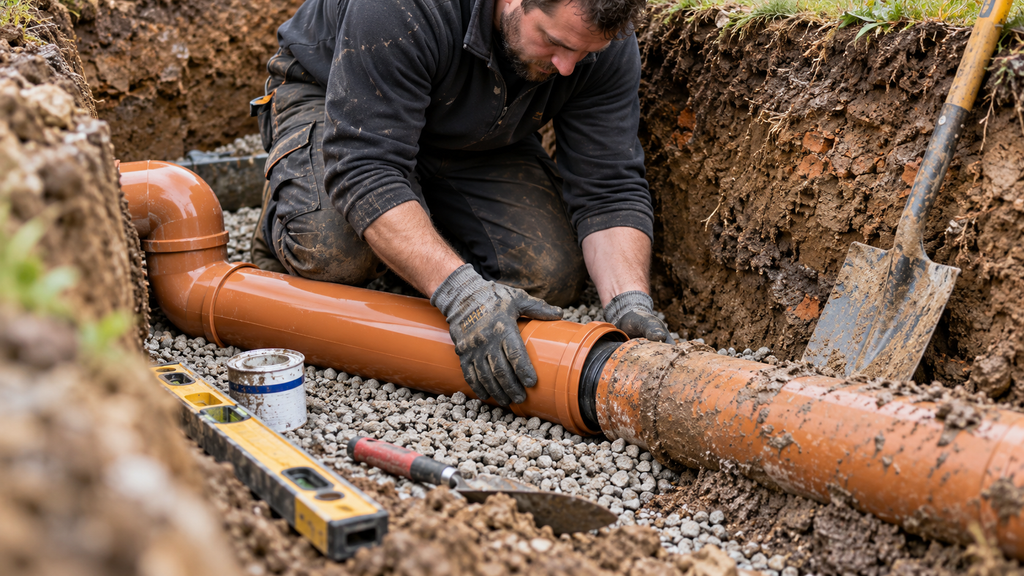
A damaged pipe or faulty component may be repairable. A failing drainage field may require specialist investigation and potentially replacement. A conventional septic tank discharging directly into a river in England generally needs a different compliant discharge arrangement.
Where the public sewer is reasonably accessible, connecting to it may be required or preferable. Any proposed replacement should be assessed against site conditions, applicable standards and permissions before work begins.
Septic tank additives cannot legalise an unsuitable discharge or repair structural defects.
Wales operates a different registration and permitting system. Most qualifying small domestic systems can be registered, but those that fail eligibility conditions may need an environmental permit.
Natural Resources Wales explains the next steps in its guidance for refused septic tank registrations.
Refusal of free registration does not necessarily mean your system can never operate. It means its discharge needs further consideration and potentially a permit. A permit is not guaranteed if environmental risks are unacceptable.
Owners must also maintain systems properly to avoid pollution.
Scotland’s private sewage discharges require the appropriate SEPA authorisation. Conditions can cover treatment performance, maintenance and environmental impacts.
SEPA’s guidance on complaints about private sewage systems explains that owners and operators remain responsible for preventing pollution or nuisance. Its approach may include advice, targeted compliance work and enforcement where necessary.
A dispute between neighbours about access or repair bills is not automatically an environmental enforcement matter. Property deeds and legal agreements may also need examination.
In Northern Ireland, private sewage discharges require consent from the Northern Ireland Environment Agency. This includes older systems, not only newly installed equipment.
The DAERA guidance on domestic discharge consents confirms that discharging without the required consent is an offence.
Owners should check existing records, verify the discharge arrangement and apply for the appropriate consent if necessary. Pollution concerns should be raised promptly with the regulator.
It can. Buyers and conveyancers may request information about private drainage, maintenance, discharge permissions and known problems. Unresolved defects can lead to further surveys, negotiations or delays.
If you are planning to sell, obtain clear advice about the problem and retain quotations, reports and evidence of completed work. Do not claim that an installation is compliant merely because it has operated without complaints.

Our Understanding UK Septic Tank Regulations: Navigating the Changes guide explains the wider regulatory framework.
Yes, where its operation and discharge meet the applicable requirements. Age alone does not establish compliance or non-compliance.
Maintenance can address some faults, but it cannot correct an unlawful discharge route or replace a missing legal authorisation.
Use a competent drainage specialist for technical issues and the relevant environmental regulator for discharge authorisation questions.
If your septic tank does not meet UK regulations, identify the specific issue before committing to repairs. Some problems can be corrected through maintenance; others require system changes, sewer connections or environmental authorisation.
Act promptly where pollution is suspected, follow the rules for your nation and keep a record of professional advice and improvements. A practical, documented response is the best route towards protecting your property and the environment.