
If your home has a septic tank near a river, stream or drainage ditch, you may wonder whether its wastewater can legally flow into that watercourse. The answer depends on the treatment system, the discharge destination and which part of the UK the property is in. A conventional septic tank does not treat sewage to the same standard as a package sewage treatment plant. Understanding that distinction is essential before installing, altering or buying a property with private drainage.
No. Under England’s general binding rules, a conventional septic tank must not discharge directly into a river, stream or other watercourse. Its liquid effluent needs further treatment through a suitable drainage field before dispersing into the ground.
A package sewage treatment plant can discharge treated effluent to suitable surface water if the installation meets every applicable rule. That does not mean any pipe leading into a nearby stream is automatically acceptable.
The Environment Agency rules for discharges to surface water explain the requirements, including treatment standards, discharge volumes and restrictions around sensitive locations.
Inside a septic tank, solids settle and floating material separates from wastewater. Bacteria break down some organic matter, but the liquid leaving the tank still contains contaminants and needs additional treatment.
Releasing that effluent directly into a watercourse can introduce organic pollution, nutrients and harmful microorganisms. These may reduce water quality, affect wildlife and create risks for people using the water.
A properly designed drainage field provides further treatment as effluent passes through suitable soil. A package treatment plant uses additional treatment processes and is designed to produce higher-quality effluent. Neither arrangement removes the responsibility to prevent pollution.
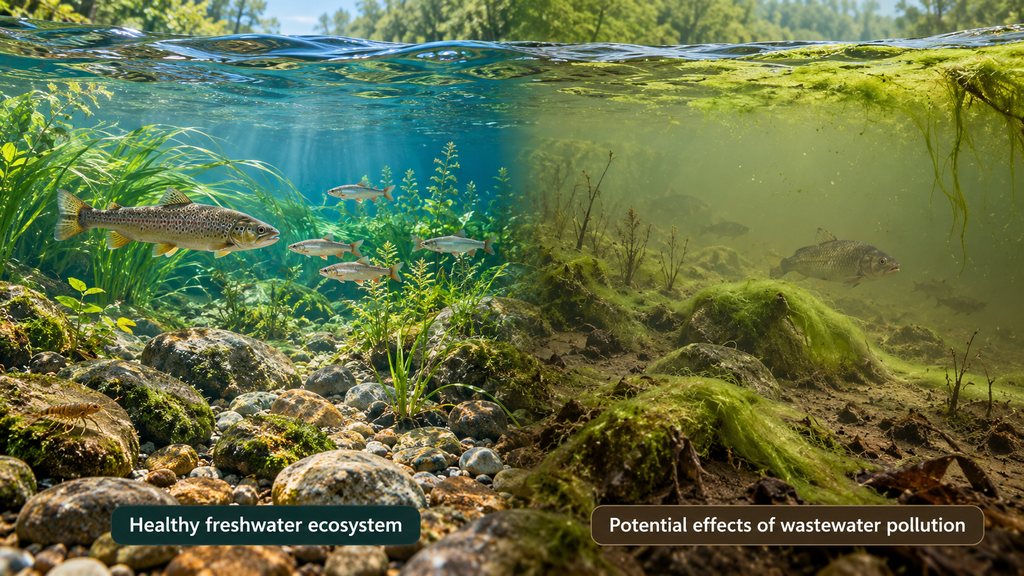
Do not assume an old discharge is lawful simply because the pipe has been there for years. In England, the Environment Agency says operators with direct septic tank discharges to watercourses must take action as soon as possible.
Depending on the site, suitable options may include connecting to the public foul sewer, replacing the tank with a small sewage treatment plant, or installing an appropriate drainage field and discharging to ground instead.
The Environment Agency expects plans for necessary work within a reasonable timescale, usually twelve months. However, you should seek advice promptly and respond sooner if the discharge is causing pollution or if the regulator directs action.
A competent drainage specialist can assess ground conditions, available space, discharge routes and possible replacement systems before work begins.
Potentially, yes. In England, qualifying domestic sewage discharges of no more than 5,000 litres per day to surface water can operate without an individual environmental permit when all relevant general binding rules are met.
A treatment plant must be correctly sized, appropriately installed and regularly maintained. Restrictions also concern the receiving watercourse, nearby protected sites and other discharge points. Rules differ according to when the discharge started, including additional conditions for newer installations.
A stream that dries up seasonally may not satisfy the requirements. An enclosed pond is also not a straightforward substitute for a suitable flowing watercourse.
Where an installation cannot meet the general binding rules, the owner should investigate whether the arrangement needs changing or requires an environmental permit. Permission is not guaranteed merely because a treatment plant is installed.
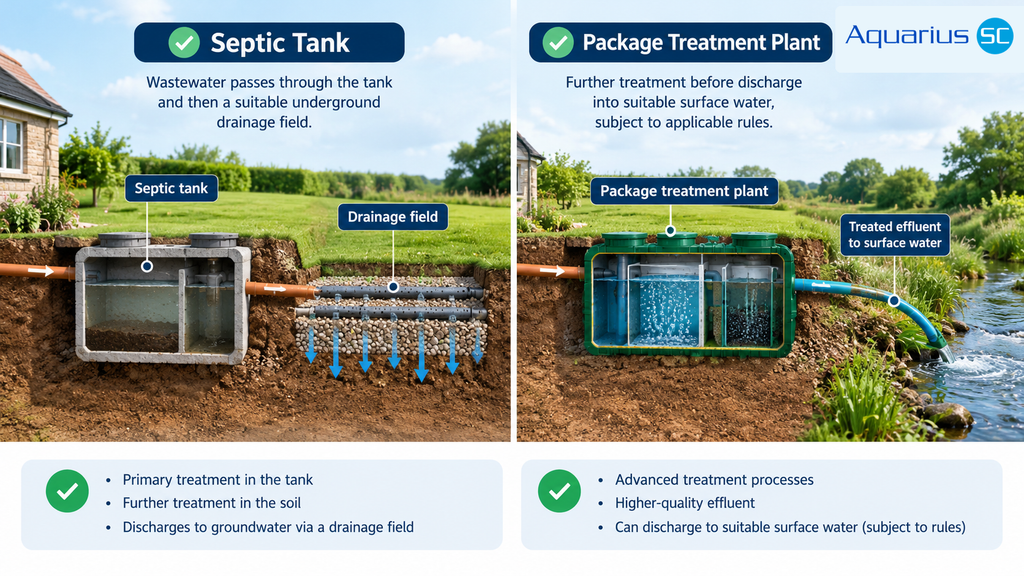
In Wales, Natural Resources Wales distinguishes between discharges into the ground and discharges to surface water. A septic tank can serve a suitable drainage field, but wastewater released into a river or stream must receive treatment from a package treatment plant.
Qualifying small systems may receive free registration, while other installations require an environmental permit. The destination, discharge volume, sensitive sites and system design all affect eligibility.
Read Natural Resources Wales guidance on registering private sewage systems before assuming an existing outlet is acceptable.
Scotland has its own authorisation requirements. The Scottish Environment Protection Agency assesses proposed watercourse discharges, including whether the receiving water has enough year-round flow and whether discharge to land is feasible.
The SEPA guidance on discharging to a watercourse explains considerations including water flow and proximity to drinking-water supplies. Owners must establish what their particular authorisation allows instead of applying English rules.
In Northern Ireland, private sewage discharges to waterways or underground water require consent from the Northern Ireland Environment Agency. The DAERA guidance on regulating water discharges explains the consent process and the environmental conditions that can apply.
An existing pipe or historic installation does not, by itself, establish that discharge consent has been granted.
First, identify whether your property has a conventional septic tank, a package treatment plant or another system. Then establish where the outlet goes. Never infer the destination solely from where an inspection cover sits.
Check available installation drawings, maintenance records, registrations and permit documents. If the route is unclear, arrange an assessment by a competent drainage professional. Do not enter a tank or attempt unsafe inspections yourself.
Important checks include:
For a broader overview of the rules affecting private wastewater systems, see our Understanding UK Septic Tank Regulations: Navigating the Changes guide.
Before commissioning any replacement, ask the installer to explain the evidence supporting the proposed discharge route. This may include drainage field suitability, treatment capacity, site limitations and the permissions required. Keep their recommendations alongside your property records. A practical solution should address the cause of non-compliance rather than merely concealing an unsuitable outlet.
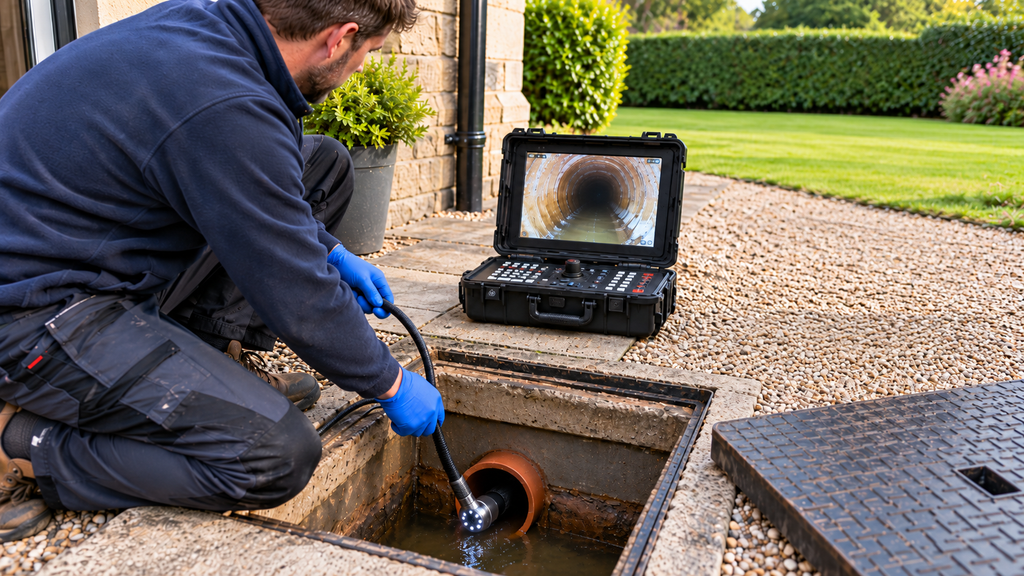
A ditch is not automatically an acceptable discharge destination. In England, direct effluent from a conventional septic tank cannot lawfully enter a ditch under the general binding rules. A treatment plant discharge also needs to satisfy conditions concerning the receiving water.
No treatment system guarantees zero environmental impact. Correct treatment, suitable discharge conditions and ongoing maintenance remain essential to protect water quality.
No. Biological additives do not replace a drainage field, upgrade a septic tank into a compliant package treatment plant or remove environmental authorisation requirements.
A conventional septic tank should not be treated as a direct river-discharge system. In England and Wales, properly treated surface-water discharges generally require suitable package treatment equipment and compliance with applicable conditions. Scotland and Northern Ireland have their own authorisation processes.
If you discover an unidentified outlet or an existing pipe entering a stream, establish the system type and obtain professional advice before making changes. Addressing a potentially non-compliant discharge protects local waterways and helps prevent expensive problems later.