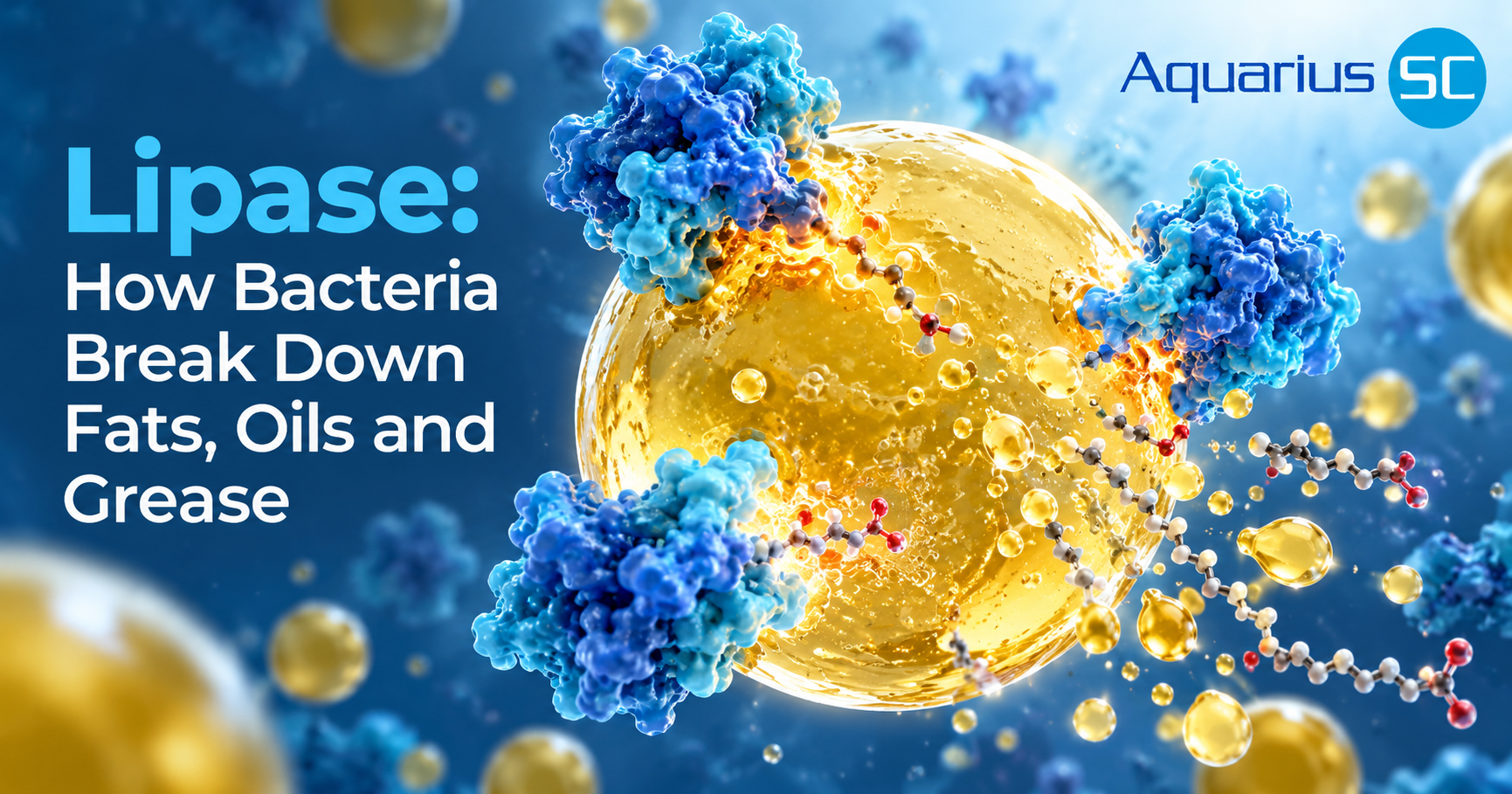
Fats, oils and grease are among the more challenging organic substances found in wastewater. Whether they originate from food preparation, washing dishes or commercial kitchens, these materials can accumulate within drainage systems and interfere with wastewater treatment.
Fortunately, certain microorganisms produce a specialised enzyme called lipase, which helps break down fats into smaller compounds that bacteria can process.
Lipase is one of six enzyme activities identified in the Aquarius SC biological formulation. Understanding how it works provides valuable insight into the relationship between beneficial bacteria, organic waste and biological wastewater treatment.
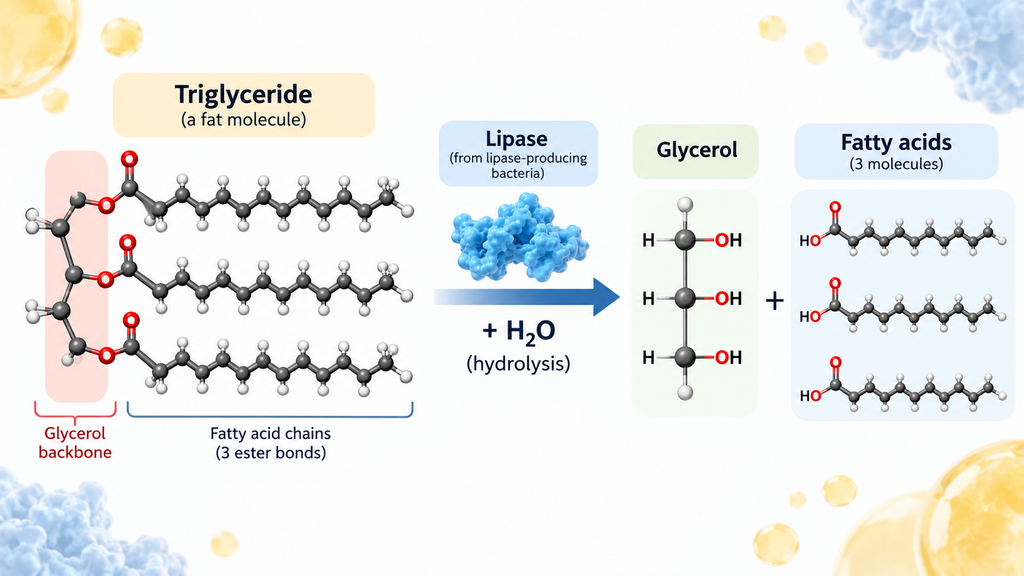
Lipase is an enzyme that catalyses the breakdown of certain fats and oils through a chemical process called hydrolysis.
Many common fats contain triglycerides, which consist of a glycerol molecule bonded to three fatty acid chains.
Lipase acts on the chemical bonds within triglycerides, helping release fatty acids and glycerol through successive hydrolysis reactions.
These smaller compounds can then undergo further biological processing by suitable microorganisms.
Lipases occur naturally throughout the environment and are produced by various bacteria, fungi, plants and animals.
A scientific review of microbial lipases and their industrial applications explains their properties and use in biological processes, including wastewater treatment.
Many microorganisms cannot directly absorb large, insoluble fat molecules.
Instead, lipase-producing bacteria can release extracellular enzymes that act on fatty substances outside their cells.
The process involves several stages:
The process does not guarantee that every grease deposit will disappear. Its effectiveness depends on the type of material, the microorganisms present and the surrounding conditions.
Fats, oils and grease are collectively known as FOG.
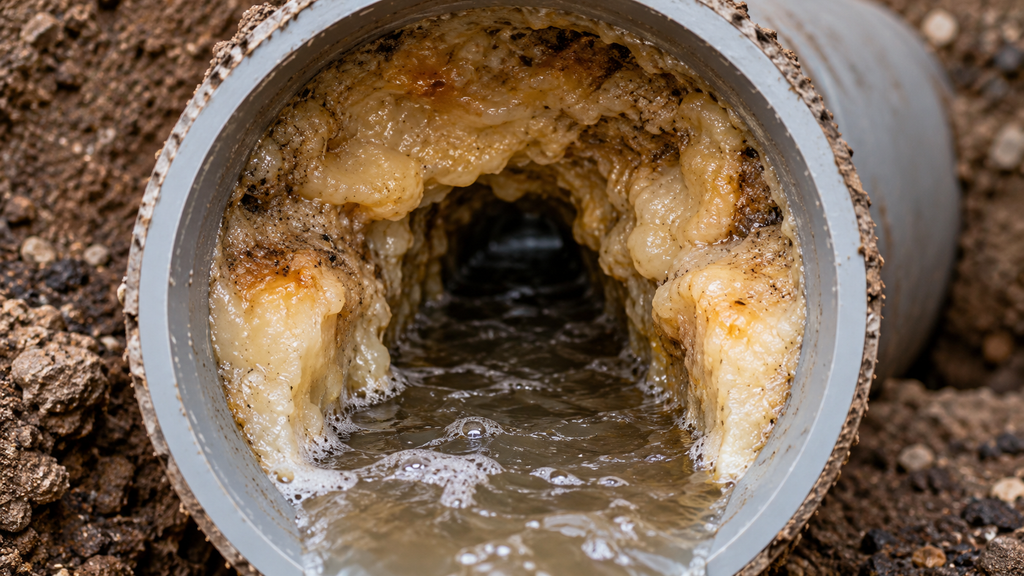
When discharged into drains, they can cool, solidify or accumulate on internal pipe surfaces. Over time, these deposits may restrict wastewater flow.
In septic systems, excessive grease can also contribute to the floating scum layer and interfere with normal treatment processes.
Commercial kitchens are particularly vulnerable because they may generate substantial quantities of fatty wastewater.
According to Water UK’s guidance on fats blocking pipes, cooking fats can harden in drains and combine with other waste materials to cause serious blockages.
Although microorganisms can process some fats biologically, preventing unnecessary grease from entering the drainage system remains essential.
Lipase contributes to the initial hydrolysis of triglycerides, making their components more accessible for subsequent biological degradation.
This is particularly relevant to wastewater containing food residues, animal fats and vegetable oils.
A scientific review of lipid behaviour in biological wastewater treatment discusses how fats and fatty acids interact with aerobic and anaerobic treatment processes.
These interactions are complex. Some lipid compounds can be biologically degraded, while excessive concentrations may inhibit microorganisms or disrupt treatment performance.
Lipase is therefore one component of a larger biological process, rather than a complete solution to grease-related wastewater problems.
Aquarius SC is a multi-culture biological treatment designed to support organic waste breakdown in septic tanks, drains and grease traps.
Its published technical information identifies lipase as one of six enzyme activities produced by the selected microbial cultures.
The other identified activities are amylase, protease, cellulase, pectinase and keratinase.
These enzymes act on different organic substrates, giving the combined formulation a broader range of potential waste-degradation capabilities.
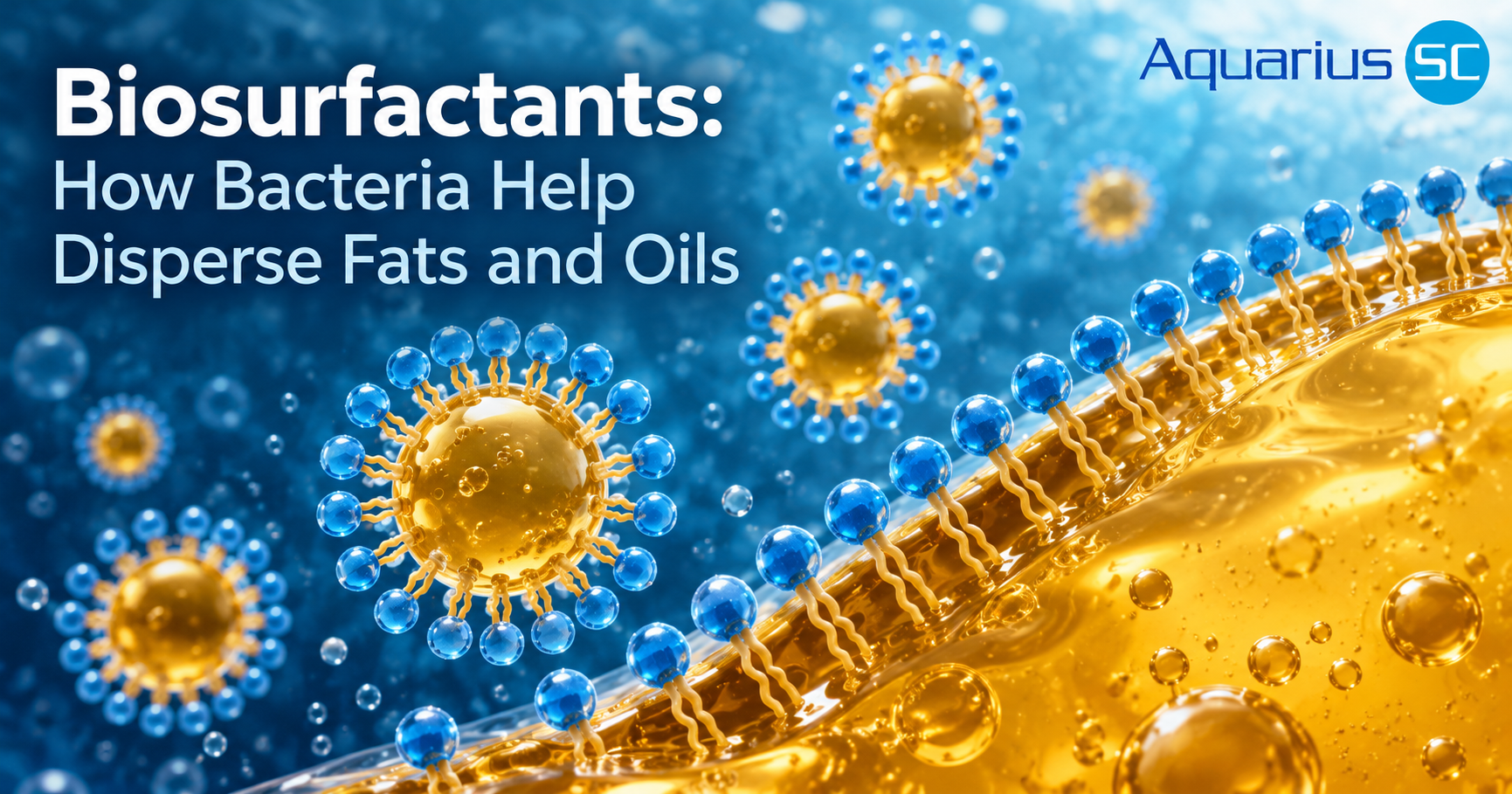
Aquarius SC also incorporates a microbial culture capable of producing its own biosurfactant.
Unlike lipase, which catalyses the hydrolysis of fats, biosurfactants influence interactions between oily substances and water.
For a detailed explanation of the complete formulation, read Aquarius SC Ingredients – How Beneficial Bacteria, Enzymes and Biosurfactants Work Together.
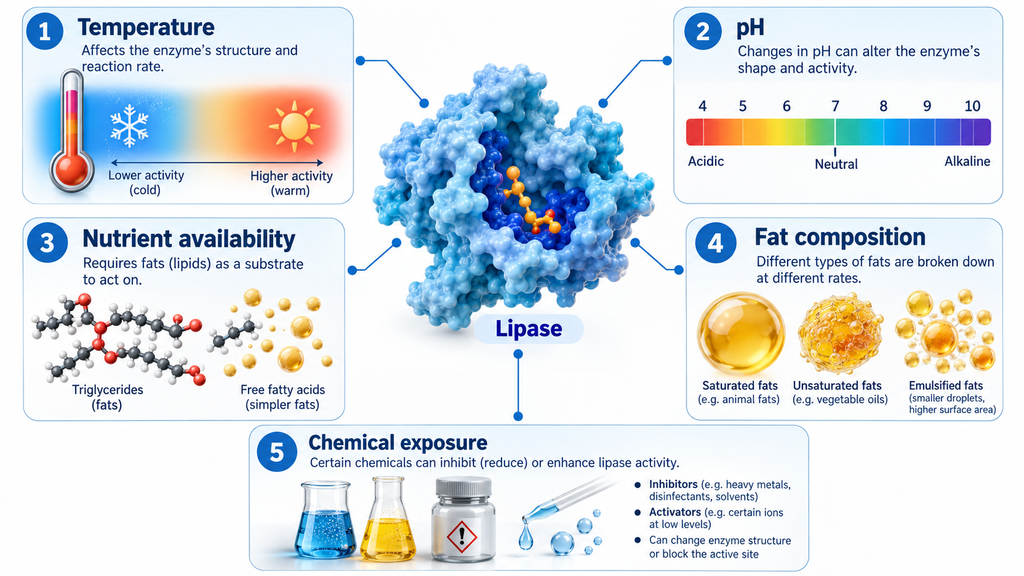
Lipase activity depends on several environmental factors.
Temperature: Enzymes generally have temperature ranges in which their activity is most effective. Excessive heat can damage enzyme structures, while lower temperatures may slow reactions.
pH: Lipase enzymes have different pH preferences depending on their biological origin.
Available nutrients: Lipase-producing bacteria need suitable conditions and nutrients to maintain their metabolism and growth.
Fat composition: Not all fatty substances are equally accessible or degraded at identical rates.
Chemical exposure: Certain chemicals may interfere with microbial activity or enzyme function.
These factors help explain why biological performance can vary between wastewater systems.
Yes. Lipase is a biological catalyst, whereas chemical degreasers may contain surfactants, solvents or alkaline substances that remove or disperse grease through different mechanisms.
Lipase specifically catalyses reactions involving suitable lipid substrates.
A chemical degreaser may loosen grease from a surface without necessarily breaking down its constituent fat molecules.
Neither approach guarantees complete removal of established deposits. The appropriate solution depends on the drainage problem and the treatment method being used.
Lipase-producing microorganisms can contribute to the biological processing of fats, but they should not be regarded as a guaranteed method of preventing blockages.
Large grease deposits may require professional cleaning, while commercial premises may need properly maintained grease separation equipment.
Good drainage practices include:
Biological treatment should complement these measures, not replace them.
Lipases can catalyse the hydrolysis of triglycerides found in many vegetable oils. The rate depends on the enzyme and environmental conditions.
Yes. Various bacterial species produce lipases, including certain members of the Bacillus genus.
No. Lipase supports specific biochemical reactions but cannot guarantee complete grease removal or replace routine septic tank maintenance.
Lipase is an important enzyme in the biological processing of fats, oils and grease.
By catalysing the hydrolysis of triglycerides, it helps produce smaller compounds that suitable microorganisms may process further.
Within Aquarius SC, lipase-producing microbial activity forms part of a wider formulation designed to act on different types of organic waste.
Understanding its function demonstrates why biological wastewater treatment depends on several complementary processes rather than one enzyme alone.