Looking after a septic tank and drainage field is mostly about preventing unnecessary problems rather than constantly interfering with the system.
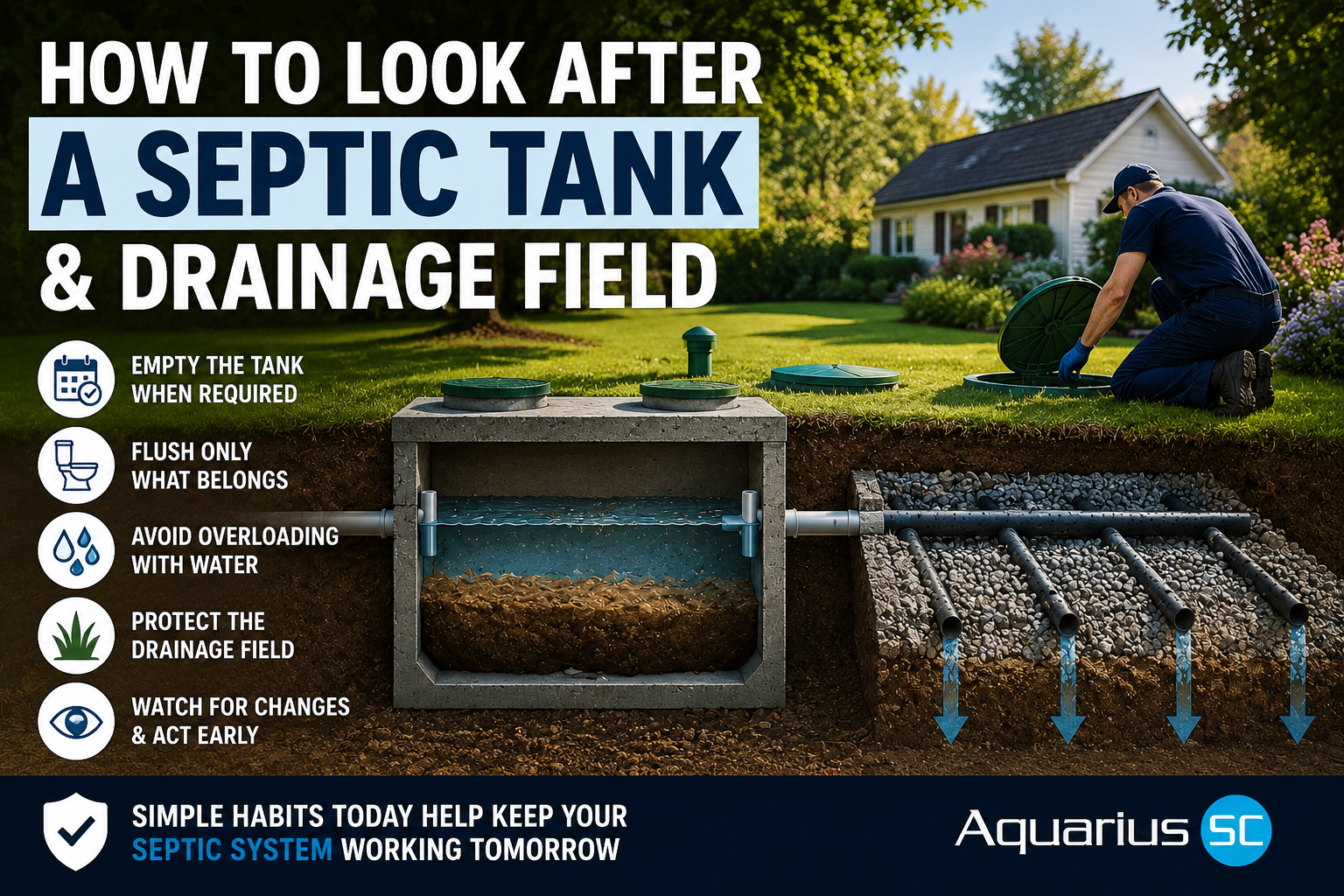
The essentials are straightforward: have the tank emptied when required, be sensible about what enters the system, protect the drainage field, keep unnecessary surface water away and pay attention when the system starts behaving differently.
You don’t need to continually add products or inspect the inside of the tank yourself. A correctly functioning system should largely operate in the background.
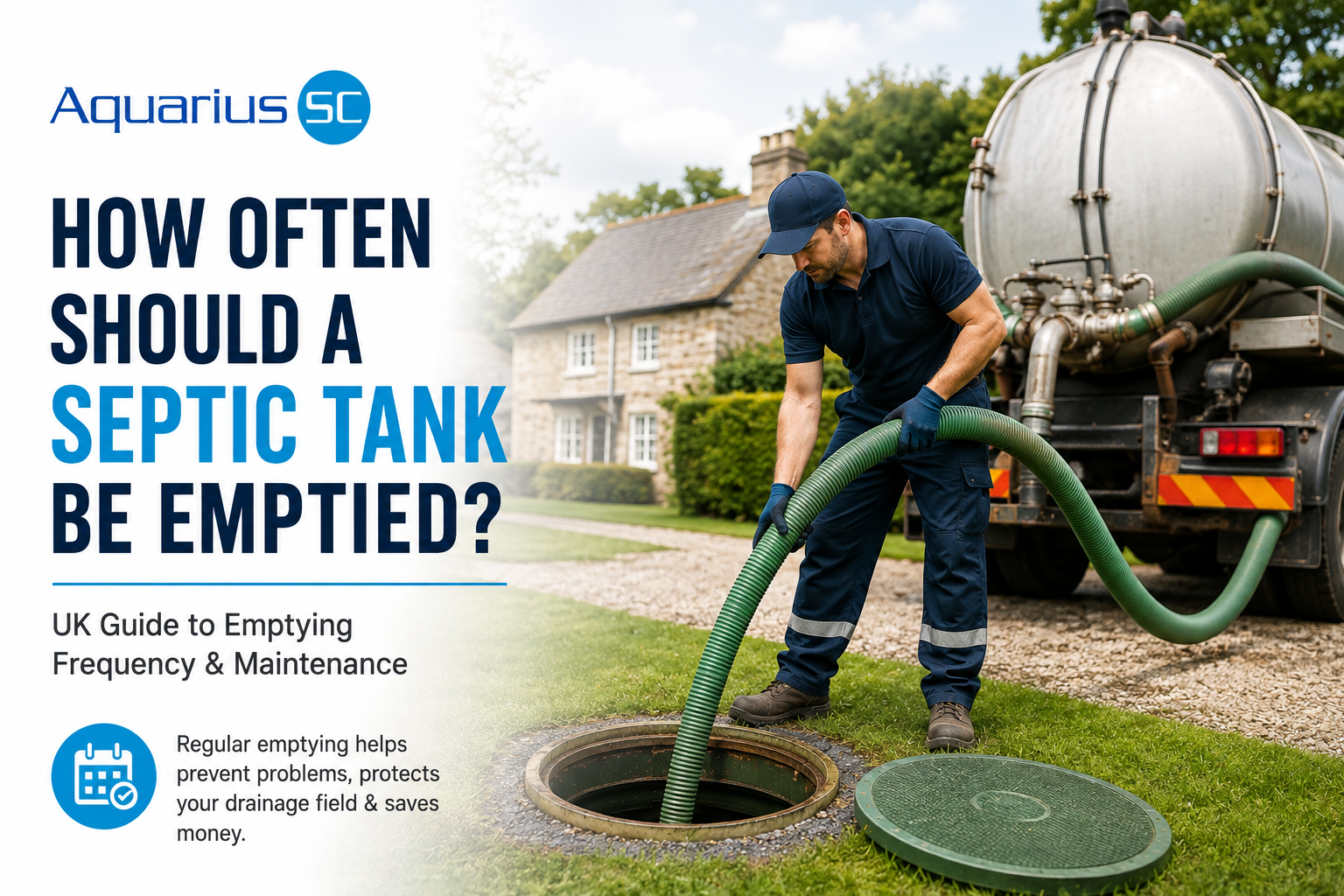
Solids gradually accumulate inside a septic tank and eventually need to be removed.
How quickly this happens depends on factors such as:
The Environment Agency’s General Binding Rules state that a septic tank should be emptied at least once a year or in accordance with the manufacturer’s instructions.
Emptying removes accumulated sludge and helps prevent excessive solids from progressing further through the system.
However, emptying shouldn’t be treated as the solution to every septic problem. If a drainage field is waterlogged or damaged, pumping out the tank won’t repair it.
Everything flushed down a toilet or washed down a household drain eventually enters the septic system.
For toilets, the safest approach is human waste and toilet paper only.
Wet wipes, sanitary products, nappies, cotton buds and other solid household waste should go in the bin rather than being flushed.
You should also avoid deliberately pouring fats, oils, paints, solvents and other inappropriate substances down household drains.
There’s no need to make normal household cleaning unnecessarily complicated. Washing machines, dishwashers and suitable domestic cleaning products are part of ordinary household use.
The aim is simply to prevent the septic system becoming a disposal route for materials that don’t belong there.
A septic system is designed to handle normal household wastewater, but introducing a very large amount within a short period gives the system more to process at once.
You don’t need to ration everyday water use.
Where practical, however, it can make sense to spread particularly water-intensive activities throughout the day instead of running everything simultaneously.
For example, several consecutive washing-machine cycles combined with baths, showers and dishwasher use can create a much larger short-term flow than normal.
This can become particularly relevant if the drainage field is already struggling because of saturated ground.
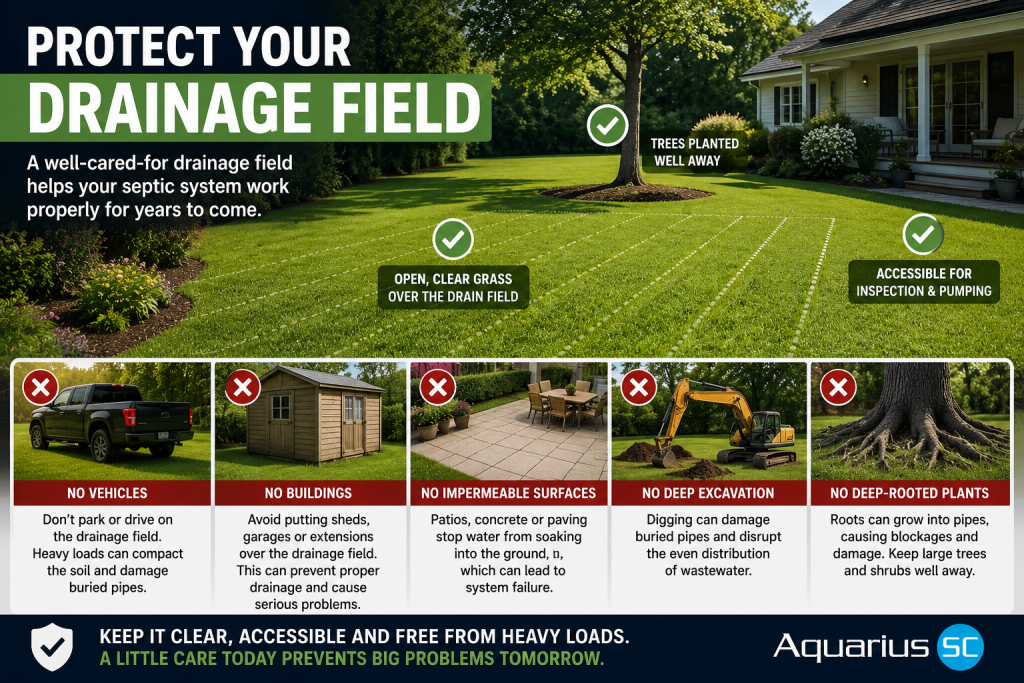
The drainage field is an important part of the system and should be treated accordingly.
Natural Resources Wales recommends keeping vehicles, livestock and deep-rooted trees away from drainage fields.
As a general rule, avoid:
Compacted ground can affect drainage, while roots and heavy loads can potentially damage the pipework beneath the surface.
Keeping the area relatively undisturbed is usually the best approach.
Rainwater shouldn’t be deliberately directed towards your septic tank or drainage field.
Check that roof gutters, downpipes and other surface-water drainage aren’t discharging directly onto the drainage area.
This is particularly important during prolonged periods of wet weather.
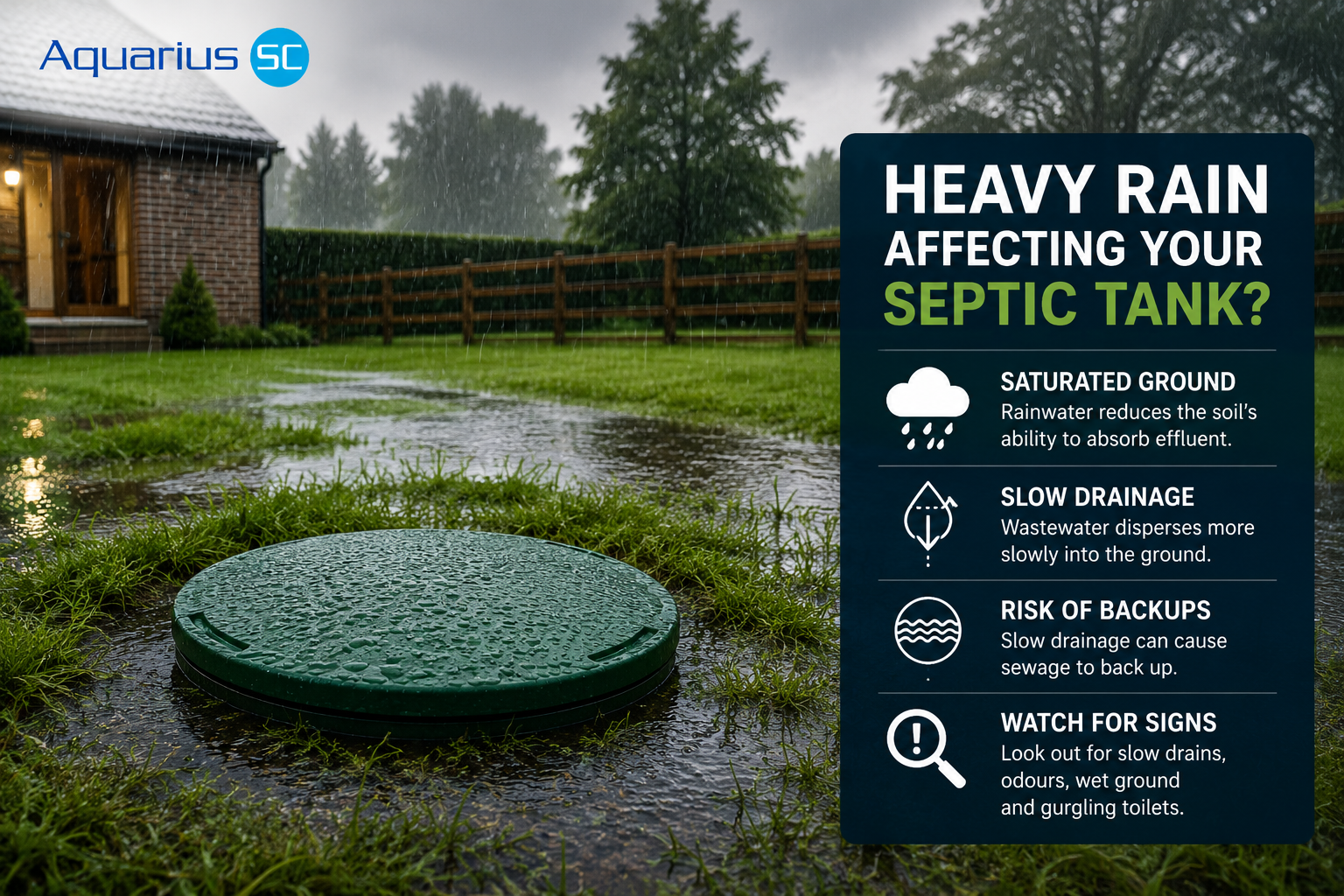
A drainage field relies on the surrounding soil being able to accept wastewater. If that ground is already saturated with rainwater, its available drainage capacity can be reduced.
Redirecting unnecessary surface water away from the area can therefore help avoid placing additional pressure on the system.
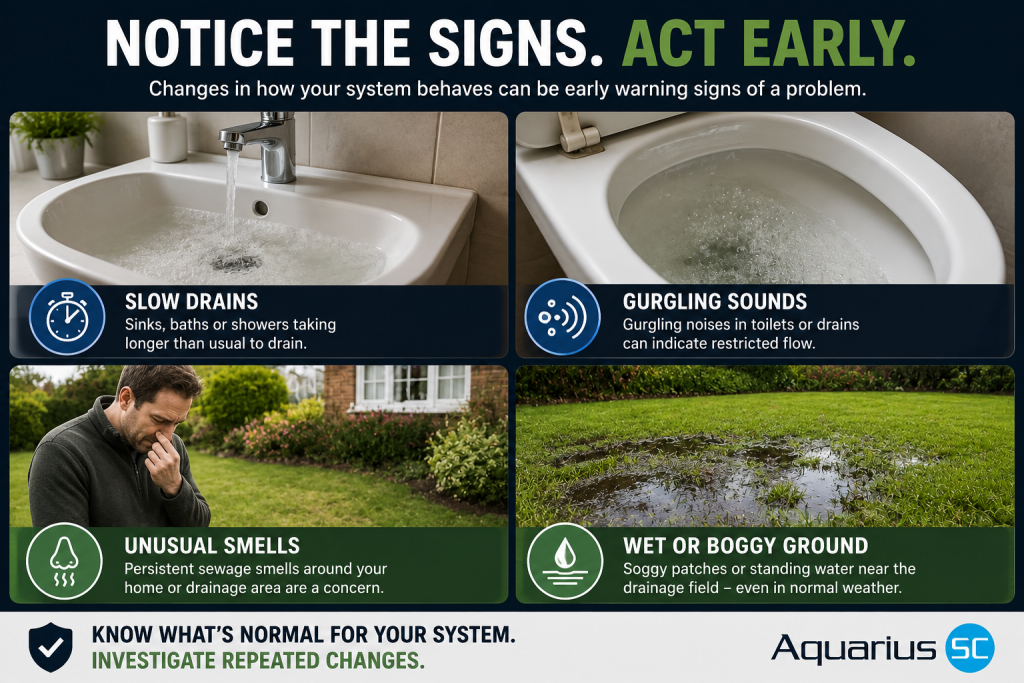
You don’t need specialist equipment to recognise many developing septic problems.
What matters is knowing what’s normal for your property.
Pay attention to changes such as:
One isolated slow drain doesn’t necessarily indicate a septic problem.
Several fixtures suddenly draining slowly, particularly alongside other symptoms, deserve more attention.
Likewise, temporary wet ground after exceptional rainfall is different from a drainage field that remains boggy or repeatedly develops standing wastewater.
Problems that disappear temporarily can still indicate something worth investigating.
For example, repeatedly pumping out a tank may temporarily lower its contents, but it won’t solve an underlying drainage-field problem.
Similarly, a system that struggles every time there’s ordinary rainfall may be revealing an issue with drainage rather than simply reacting normally to the weather.
SEPA advises owners to regularly inspect and maintain septic tanks and private sewage treatment systems and to address problems rather than allowing them to deteriorate.
The earlier you recognise a repeated pattern, the easier it is to determine what part of the system actually needs attention.
Keeping basic records makes it easier to understand how your septic system behaves over time.
Record things such as:
You don’t need an elaborate maintenance log.
Even a simple record of when the tank was last emptied can prevent uncertainty several years later.
It can also help identify changes. If a tank that previously operated predictably suddenly requires much more frequent attention, you’ll have something to compare against.
You should know approximately where the tank, access covers and drainage field are located.
This helps when arranging emptying or inspections and reduces the chance of accidental damage during landscaping or building work.
It also makes it easier to keep vehicles and heavy equipment away from the drainage field.
Never enter a septic tank yourself. Septic tanks are confined spaces that can contain dangerous gases and should only be accessed by appropriately trained professionals.
Looking after a septic system doesn’t require constant attention.
Focus on a few practical habits:
Empty the tank when required.
Don’t allow sludge to accumulate indefinitely.
Keep unsuitable waste out.
Use toilets and drains for their intended purpose.
Protect the drainage field.
Keep vehicles, structures and unnecessary surface water away.
Pay attention to changes.
Repeated smells, slow drainage, waterlogging or backups shouldn’t simply be ignored.
Keep basic records.
Know when the system was last emptied, inspected or repaired.
These basic habits form an important part of good septic tank maintenance and can help you recognise when the system needs professional attention rather than waiting for a more serious problem to develop.
The best way to look after a septic tank and drainage field is to avoid creating unnecessary problems in the first place.
Have the tank emptied appropriately, keep unsuitable materials out of household drains, protect the drainage field and avoid directing surface water towards it.
Most importantly, learn how your own system normally behaves.
If drainage becomes progressively slower, smells appear, the drainage field remains waterlogged or wastewater reaches the surface, don’t simply assume it’s part of owning a septic tank.
A well-functioning system shouldn’t need constant intervention.