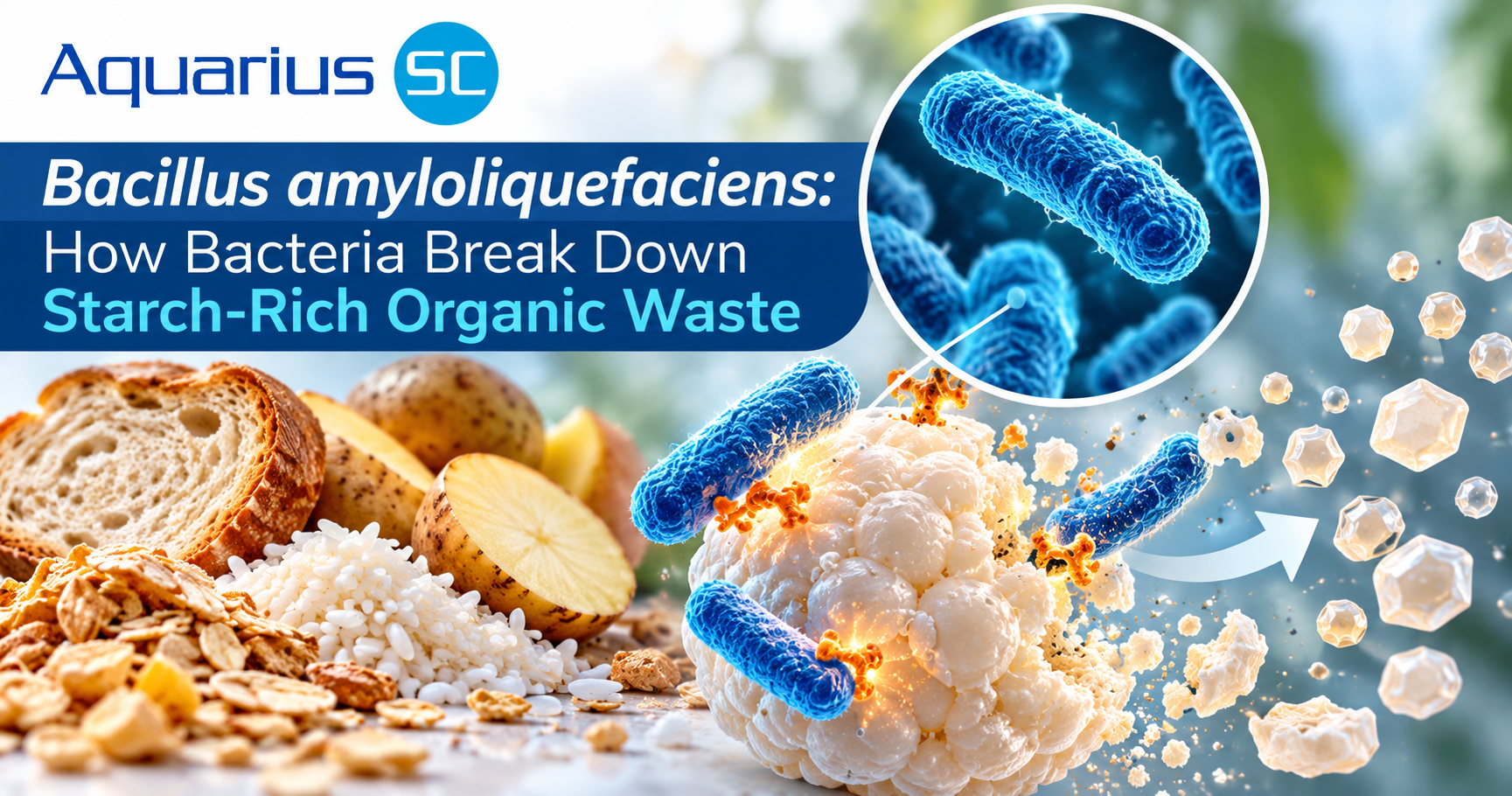
Starchy food waste does not immediately dissolve into simple sugars when it enters wastewater. Bread, rice, potatoes and other carbohydrate-rich residues contain complex molecules that microorganisms must process before they can utilise their nutrients.
Bacillus amyloliquefaciens is a bacterial species recognised for producing enzymes capable of breaking down starch and, in certain strains, other plant-derived carbohydrates.
Scientific research has examined how its enzymes act on both soluble starch and the more resistant starch granules found in raw plant material.
These capabilities make the species an interesting example of how bacteria contribute to organic waste decomposition.
Bacillus amyloliquefaciens is a Gram-positive, rod-shaped bacterium associated with soil and plant environments.
It was historically recognised for its ability to produce amylase enzymes, which act on starch-containing substances.
Certain strains also produce additional carbohydrate-degrading enzymes, allowing them to utilise different organic materials.
The species is particularly useful for understanding the biological processing of food residues because starch frequently occurs alongside other carbohydrates within plant tissues.
Its investigated activities demonstrate how microorganisms can obtain nutrients from materials that initially contain complex, relatively inaccessible carbohydrate structures.
Starch is a major energy-storage carbohydrate in plants.
It consists primarily of two glucose-based polymers: amylose and amylopectin.
Amylose contains mainly linear chains, whereas amylopectin has a branched structure.
In many foods, these molecules are organised into starch granules. Their internal arrangement can make them less accessible to enzymes than starch that has already been dispersed through cooking or processing.
This distinction matters when considering organic waste.
Cooked rice, bread and raw potato residues do not necessarily expose their starch to microorganisms in the same way.
The physical structure of the waste can therefore influence how readily bacterial enzymes act on it.
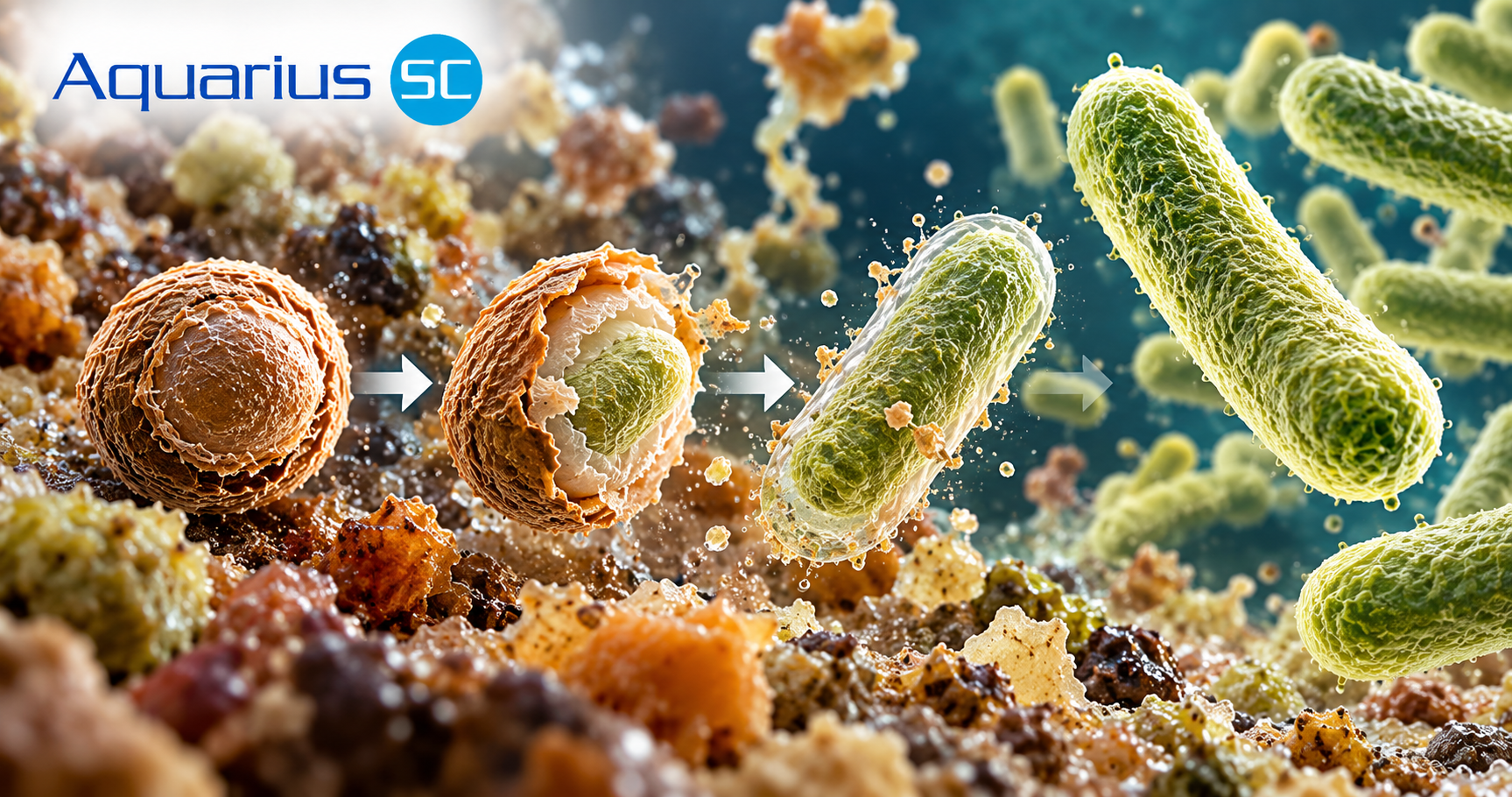
Certain Bacillus amyloliquefaciens strains produce alpha-amylases capable of hydrolysing starch.
These enzymes break internal bonds within starch chains, generating shorter carbohydrate fragments.
However, their effectiveness depends partly on whether the enzyme can reach its target bonds.
Researchers have investigated how Bacillus amyloliquefaciens alpha-amylase acts on starch granules from potatoes, wheat, rice and maize.
A study published in Process Biochemistry used scanning electron microscopy to examine changes in granule surfaces during enzymatic degradation.
The researchers observed that the patterns of starch erosion differed between botanical sources.
Their research comparing enzymatic degradation of raw starch granules demonstrates why the physical characteristics of a substrate can influence its biological processing.
This provides an important distinction from simply describing starch hydrolysis: enzyme activity must also be considered in relation to the material being degraded.
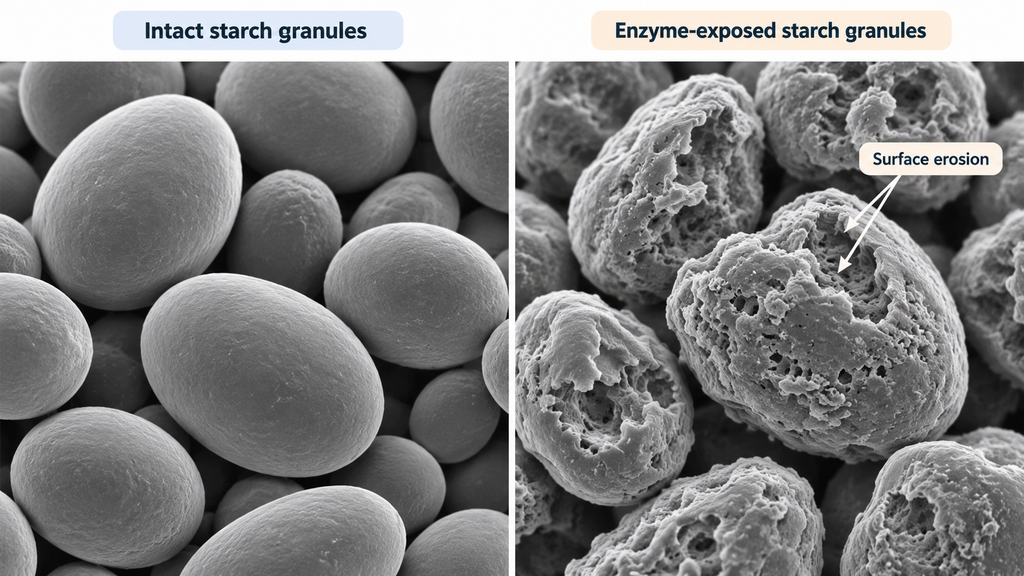
As enzymes act on accessible regions of a starch granule, the material can begin to lose its original structure.
Further hydrolysis generates shorter carbohydrates, including maltose and other starch-derived oligosaccharides.
Additional enzymatic reactions may convert suitable fragments into glucose.
Microorganisms equipped with the necessary transport and metabolic pathways can absorb these smaller compounds.
The resulting carbohydrates may be used to generate energy or support cellular growth.
Consequently, the degradation of starch-containing waste involves more than visible fragmentation.
It changes complex plant carbohydrates into compounds that can participate in further biological reactions.
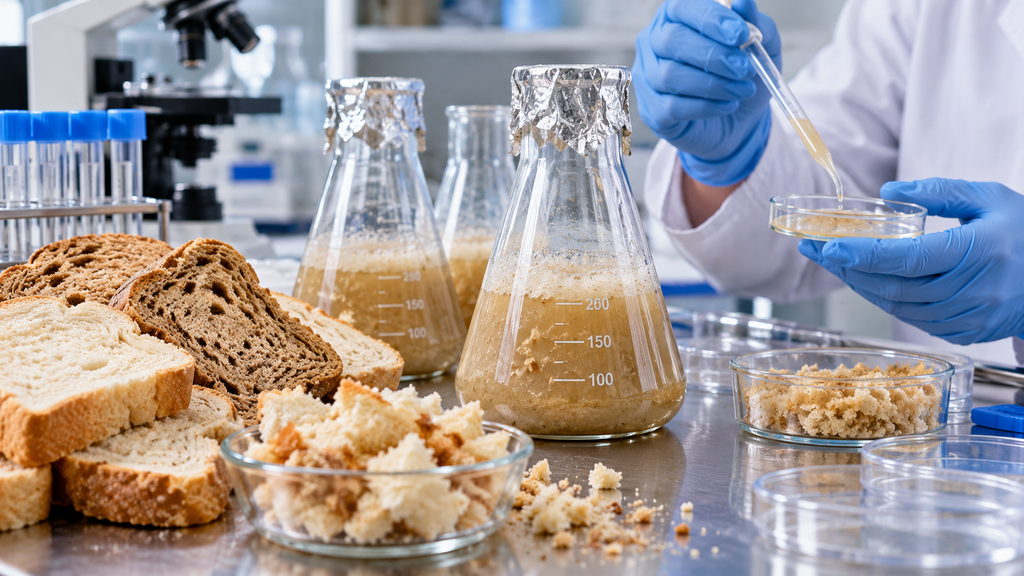
Discarded bread provides a practical example of starch-rich organic waste.
A 2023 study investigated the use of white and brown bread waste as substrates for producing alpha-amylase using Bacillus amyloliquefaciens.
The researchers demonstrated substantial enzyme activity and examined the resulting enzyme’s ability to hydrolyse starch.
They also investigated its potential application in treating starch-rich industrial wastewater.
The study published in Scientific Reports on alpha-amylase production using discarded bread shows how food waste can serve as a nutrient source for bacterial enzyme production.
Importantly, the research illustrates two connected processes.
Organic waste can support microbial growth and enzyme production, while the resulting enzyme may contribute to the breakdown of additional starch-containing material.
The study was conducted under controlled experimental conditions, so its measured activities should not be interpreted as typical degradation rates inside domestic septic tanks.
Not all plant-derived waste is primarily starch.
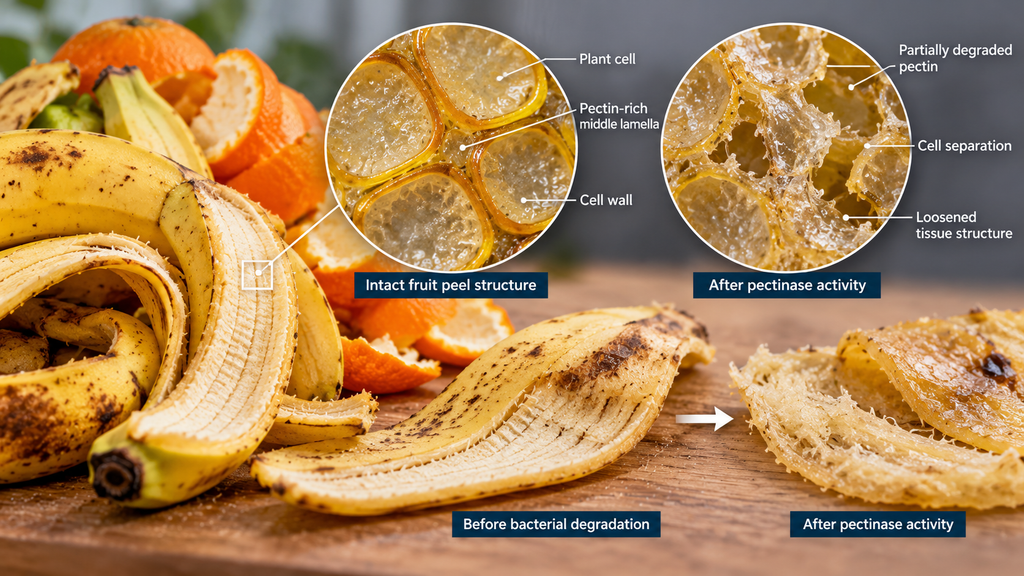
Fruit and vegetable residues also contain structural carbohydrates, including pectin.
Certain Bacillus amyloliquefaciens strains have been investigated for their ability to produce pectin-degrading enzymes.
In a 2021 study, researchers examined strain TKU050 and its production of pectinase using agricultural by-products.
Materials investigated included banana peel, orange peel, rice bran and wheat bran.
The researchers subsequently explored the enzyme’s ability to process pectin-containing banana peel material and generate smaller carbohydrate products.
The investigation of Bacillus amyloliquefaciens pectinase production from agricultural residues demonstrates that selected strains can act on plant carbohydrates beyond starch.
This is relevant to mixed food waste, where fruit, vegetable and cereal residues contribute different organic substrates.
It does not mean that every strain produces the same combination of enzymes.
A kitchen waste mixture may contain bread, potato peelings, vegetable fragments, proteins and oils.
Although these substances are present together, their chemical structures differ.
A starch-degrading enzyme does not automatically process the pectin found in fruit tissue, nor does pectin degradation replace the activities required to break down proteins or fats.
Different microorganisms and enzymes therefore contribute different reactions.
Research into Bacillus amyloliquefaciens illustrates how the biochemical capabilities of individual strains can broaden the range of substrates they utilise.
The important principle is complementary activity: complex organic waste may require several biological processes before its components become available for further metabolism.
Starch-containing organic residues can enter wastewater through food preparation, washing and other household activities.
Before their carbohydrates become readily accessible to microbial communities, some of these materials require extracellular enzymatic processing.
The amylase-producing capabilities of Bacillus amyloliquefaciens provide an example of how bacteria can participate in this process.
Enzymes act on accessible starch molecules, producing smaller carbohydrates that may undergo further microbial utilisation.
The extent of decomposition depends on the waste material, the microorganisms present and the conditions of the treatment environment.
Enzymatic hydrolysis is therefore one stage within a wider biological process, rather than a guarantee that all organic matter will be completely removed.
Aquarius SC uses selected microbial cultures associated with several organic waste-degrading enzyme activities, including amylase and pectinase.
Research into Bacillus amyloliquefaciens helps explain the biological significance of these activities.
Its studied alpha-amylases illustrate how starch-rich materials can be converted into smaller carbohydrates, while research involving certain strains demonstrates additional capabilities associated with plant-derived organic matter.
These mechanisms complement the wider explanation of how beneficial bacteria, enzymes and biosurfactants work together to break down different types of organic waste.
The research describes the capabilities of investigated bacterial strains rather than establishing the identity of particular cultures within Aquarius SC.
Bacillus amyloliquefaciens demonstrates how bacteria can contribute to the decomposition of starch-rich food waste.
Its investigated alpha-amylases can act on complex starch structures, while selected strains possess additional enzymes capable of processing other plant-derived carbohydrates.
Research into raw starch granules, discarded bread and agricultural residues shows why both the biochemical properties of bacterial enzymes and the composition of organic waste matter.
Together, these findings illustrate how microbial activity helps convert complex food residues into smaller compounds that can undergo further biological processing.